Kyiv’s approach to China reflects a complex strategic calculation: Ukrainian authorities seek to maintain diplomatic channels with Beijing, hoping to persuade it to use its influence over Moscow to bring the war to an end while preventing China from fully siding with Russia. However, four and a half years of war have demonstrated the limits of Kyiv’s ability to influence Beijing’s position. China has become Russia’s principal source of economic support and a key supplier of critical dual-use components, technologies, and equipment to its defense-industrial base, helping sustain Russia’s military capabilities in the face of Western sanctions.
Beijing views its partnership with Moscow not only in terms of economic benefits but also as an important element of its strategic positioning vis-à-vis the US. The nature and extent of China’s support for Russia are determined primarily by the balance between the political and economic benefits of its partnership with Moscow and the risks that deepening this relationship poses to Beijing’s relations with the West, rather than by the state of its relations with Ukraine. This calls into question Kyiv’s expectation that deeper bilateral dialogue can change Beijing’s position and raises questions about whether Ukraine’s diplomatic tools adequately address the factors that actually shape China’s policy toward the war.
Kyiv’s Diplomatic Expectations vs. Beijing’s Strategic Calculus
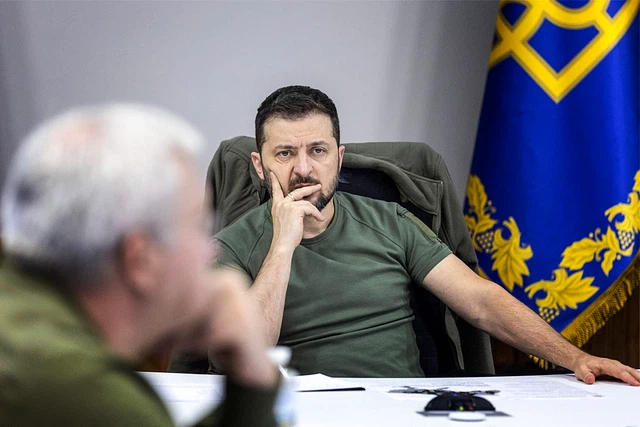
The disconnect between Kyiv’s diplomatic expectations and the considerations driving Beijing’s policy is clearly reflected in Volodymyr Zelenskyy’s public assessments. On the one hand, the Ukrainian president acknowledges that China possesses substantial economic and political leverage that could compel the Kremlin to end the war. On the other, he points to the Chinese leadership’s unwillingness to exercise that leverage. Elaborating on China’s position, Zelenskyy has stated that Beijing is not politically “in the middle” but leans more toward Russia, demonstrating greater openness and willingness to assist Moscow than Kyiv. He has also emphasized that, for a country of China’s size and influence, even a slight tilt toward Russia can have significant implications for the course of the war.
Nevertheless, the Ukrainian government continues its efforts to maintain channels of communication with China. During a meeting with the heads of Ukraine’s diplomatic missions abroad in August 2026, Zelenskyy stressed the need to pursue dialogue with Beijing, explaining that the objective was to prevent China from fully siding with Russia. Yet Kyiv and Beijing differ significantly in how they view the purpose and objectives of diplomatic engagement.
From the outset, China has viewed Russia’s war against Ukraine in the context of its own confrontation with the US, and Beijing’s support for Moscow has been a deliberate political choice. China has accepted key elements of the Kremlin’s narrative concerning NATO enlargement and the need to respect the “legitimate security interests of all countries,” which Moscow has invoked to justify its aggression against Ukraine. By endorsing this reasoning, Beijing also seeks to legitimize its own claim to act in a similar manner in Asia. There are numerous parallels between Russia’s conduct in Ukraine and China’s behavior in its own region. These include the use of historical narratives and notions of shared national identity to justify territorial claims over Ukraine and Taiwan, respectively; the use of military force and coercion to challenge the regional status quo; and the use of rhetoric about threats posed by NATO and the resurgence of Japanese militarism to justify their own military activities and oppose efforts by neighboring countries to strengthen their defense capabilities. These parallels help explain the strategic convergence between Moscow’s and Beijing’s approaches.
The Key Drivers of China’s Policy Toward Ukraine
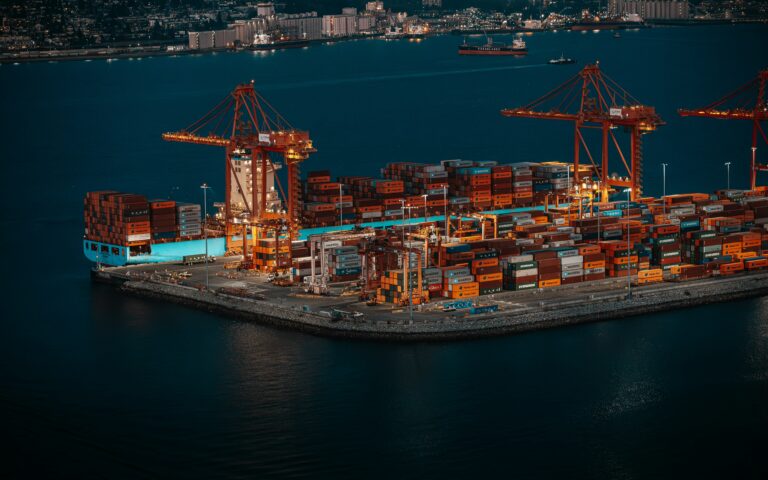
China does not link the development of its bilateral relations with Ukraine to changes in its policy toward Russia. Since the start of the full-scale invasion, economic and military-technical cooperation between China and Russia has deepened considerably. Chinese supplies of dual-use goods have become critical to Russia’s defense-industrial base, while large-scale purchases of Russian energy resources, the expanding use of the yuan in bilateral settlements, and reliance on Chinese financial infrastructure have helped Moscow mitigate the impact of Western sanctions.
For its part, Beijing secures Russian energy supplies on favorable terms and leverages Moscow’s growing dependence to gain greater access to advanced military technologies that the Kremlin had previously been reluctant to share, particularly in the areas of air and missile defense and nuclear submarine capabilities. This dependence also gives China practical experience in modern warfare that its own armed forces lack, which is particularly significant as China prepares for a potential confrontation with the US and its allies, especially over Taiwan.
Beijing’s position reflects the fact that its bilateral agenda with Ukraine is merely a derivative of its broader relationship with the EU. China tends to intensify its diplomatic engagement with Ukraine primarily in response to pressure from European countries or when the prospect of European sanctions against Chinese businesses becomes a tangible risk. Because Brussels regards Ukraine as an integral part of its own security, Beijing’s efforts to avoid a deterioration in relations with the EU, rather than the state of its bilateral dialogue with Kyiv, are what drive it to maintain at least the appearance of diplomatic balance.
The selective nature of this approach is illustrated by Chinese Foreign Minister Wang Yi’s meeting with his Ukrainian counterpart, Andrii Sybiha, on the sidelines of the Munich Security Conference in February 2026. During the meeting, the Chinese side invited Sybiha to visit Beijing and announced a decision to provide Ukraine with an additional package of humanitarian energy assistance. These steps coincided with heightened scrutiny of the role of China and Hong Kong in facilitating the supply of Western components to Russian attack drones to circumvent sanctions, amid large-scale Russian winter strikes against Ukraine’s energy infrastructure. Nevertheless, despite Kyiv’s interest in the visit, it has yet to take place, and no date has been set. This suggests that Beijing calibrates the intensity of its contacts with Ukraine primarily according to its own foreign policy priorities, maintaining a selective approach to the development of bilateral relations.
Ukraine’s Strategic Constraints and the European Factor
Nevertheless, Kyiv must consider not only the political consequences of a deterioration in relations with China but also the potential impact of Beijing’s decisions on Ukraine’s ability to sustain its war effort. Ukrainian drone production remains heavily dependent on Chinese components, including electronics, motors, magnets, thermal imaging sensors, and battery cells, which are difficult to replace because of limited production capacity and the high cost of alternatives. According to representatives of Ukraine’s defense industry, a complete transition to Western-made components could increase costs by as much as 60 percent and lead to a comparable reduction in production output. Under these circumstances, the prospect of Beijing significantly restricting supplies of critical components to Ukraine while prioritizing Russian customers poses a particular threat, increasing the vulnerability of Ukraine’s defense production and narrowing Kyiv’s room for maneuver in pursuing a tougher policy toward China.
At the same time, Kyiv’s efforts to prevent China from further expanding its support for Russia through political dialogue effectively contribute to the normalization of such conduct without meaningful political consequences for Beijing. Maintaining political ties and extensive trade and economic relations with Ukraine – whose imports from China exceeded $19.6 billion in the first eight months of 2026 – provides Beijing with additional grounds to reinforce its claims of neutrality in the war, particularly in its dealings with the EU, without requiring it to reconsider its cooperation with Moscow.
Meanwhile, Ukraine’s economic dependence on Chinese supplies and concerns over further strategic alignment between Beijing and Moscow constrain Kyiv’s freedom of action. This caution is also reflected in Ukraine’s approach to developing economic, technological, and humanitarian ties with Taiwan, even as several European countries maintain such engagement. Beijing, however, has shown no comparable willingness to take Ukraine’s security interests into account, continuing its cooperation with Russia in areas critical to Russian military production.
Given this asymmetry, a key priority for Ukrainian diplomacy should be closer policy coordination with European partners aimed at ensuring that further Chinese support for Russia creates risks of political and economic losses in relations with the EU that are comparable to or greater than the benefits Beijing derives from its partnership with Moscow. Shifting this balance, rather than deepening bilateral dialogue as Kyiv has sought to do, could create the conditions for meaningful constraints on Chinese support for Russia’s aggression.
Written by

Nataliya Butyrska
Nataliya Butyrska is an independent expert on East Asia. She is an author of more than 100 analytical articles and reports on the issues of international relations with a special focus on the Indo-Pacific region and Ukraine's relations with Asian countries.