Chinese manufacturing is expanding in Southeast Asia (SEA) and in and around the EU as China faces economic transition at home and trade barriers abroad. Foreign direct investment (FDI) lets Chinese companies keep serving major export markets, which host governments often welcome for the jobs and technology it promises. SEA countries’ attempts to extract that value carry lessons for Europe, despite differences in the nature of each region’s leverage.
It is not an easy moment for Chinese manufacturers overseas. Chinese companies in Hungary carefully watch a reset under Prime Minister Péter Magyar. Beijing, meanwhile, tightens restrictions on outbound FDI to strengthen China’s hold on global supply chains. EU countries are also wary of Chinese companies finding ways to avoid tariffs. Yet there is still considerable discussion about the potential benefits of FDI.
Two Markets, One Logic
Chinese companies face involution and rising labor costs at home, while foreign tariff walls challenge Beijing’s desire to both defend China’s dominance in so-called ‘traditional industries’ and move its industry up the value chain. One answer from China has been to invest in basic manufacturing in willing countries that provide access to the most important consumer markets – the US and the EU – while limiting technology transfer.
Blatant transshipment to avoid Western tariffs is a real phenomenon, especially in SEA. Trump’s 40 percent tariff on transshipped goods followed data showing that Vietnam’s export gains to the US closely mirrored China’s export losses, category by category. But that is not the whole story. Some manufacturing expansion is real, and that is part of the reason for Beijing’s new regulations on outbound FDI.
China has long recognized the importance of technology transfer. This was one of the reasons behind the long-standing joint-venture requirements on FDI coming into China. Now that the rest of the world is becoming more interested in advanced Chinese technology, Beijing is not keen on others replicating its approach. At the same time, the success Beijing had in the trade war with the US through the weaponization of rare earth minerals showed the power of supply chain control.
The new regulations Beijing announced in recent weeks thus serve two purposes: reinforcing China’s economic-coercion toolkit and responding to companies that are shifting capacity abroad. Either way, they narrow the room countries have to extract technology transfer. FDI will thus involve negotiation between Beijing – which wants market access through overseas sites while transferring as little capital and technological know-how abroad as possible – and host countries trying to extract as much as they can in return for the ‘risk’ of hosting Chinese factories.
Asymmetric Leverage in Diverse Regions
SEA has become the top destination for Chinese manufacturing FDI by number of deals. SEA countries have long desired FDI to improve their technological bases – a goal that goes back to a variety of post-independence strategies for import substitution or export promotion. For Chinese manufacturers, relatively low labor costs, the presence of raw materials, and regional integration via the Association of Southeast Asian Nations (ASEAN) make the region an attractive steppingstone toward US and global markets.
The region’s broad demands for a greater share of the added value are hampered by a set of obstacles. Limited institutionalized cooperation in ASEAN on trade with the rest of the world, the remaining domestic bureaucratic hurdles in SEA countries, and the absence of a wealthy consumer market of their own all limit SEA countries’ leverage vis-à-vis Beijing. At the same time, their comparatively lower technological base means the transfer they ask for is less damaging to Beijing’s core development interests.
China’s neighbor, Vietnam, has been the clear volume winner, with manufacturing expansion concentrated in electronics. Indonesia has used nickel export bans to force an onshore supply chain, leveraging its position as host state. Malaysia is using its relatively well-educated and Anglophone labor force to position itself as a ‘China+1’ node, a tariff bridge in the semiconductor industry.
Research into FDI in Vietnam’s electronics industry showed no automatic spillover effects, despite substantial growth in volume. Indonesia used its leverage to gain volume in nickel production, but its export ban on unprocessed minerals meant that even domestic miners could only sell to the small number of local processors, all of which were Chinese-owned. Malaysia is getting squeezed by the US-China chip war, especially after allegations that its territory was used to smuggle advanced Nvidia chips to China.
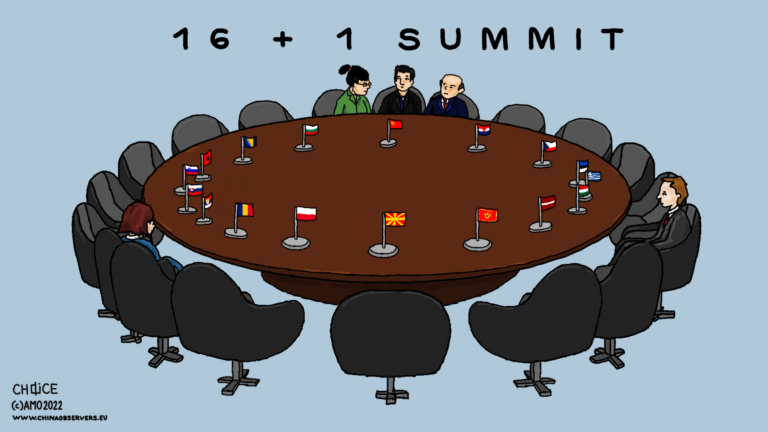
Within the EU and its periphery, countries with full or partial access to the EU Customs Union have been drawing more attention in recent years as supposed entry points for Chinese companies keen to maintain or gain access to the rich consumers in that part of the world. Compared to SEA, these countries generally have narrower demands and stronger bargaining positions. Yet the new energy technologies they seek touch on Beijing’s core development interests more directly, given their strategic nature. Chinese FDI continues to climb, with the focus on New Energy Vehicle (NEV) technology.
These countries’ national strategies are even more diverse than SEA’s. Lithuania, Poland, and Czechia court Taiwanese investment in drones and semiconductors instead. Hungary and Slovakia, meanwhile, are joined by Spain, Turkey, and Morocco as major destinations for NEV-related manufacturing, even as Brussels raises barriers to China-made vehicles. France has also sought a joint venture for battery production.
There is, however, a big difference between the more active SEA attempts to use the region’s bargaining strength vis-à-vis China and what is happening in and around Europe. A 2025 report by the NGO Transport & Environment (T&E) found that upcoming battery ventures with Gotion in Germany and Slovakia, and with CATL in Spain, lacked clear technology-sharing pathways. Meanwhile, uncertainty in Turkey and Hungary clouds the future of Chinese plans there. This is the moment for European countries to pay attention to the lessons from SEA.
The EU Should Learn from SEA
Countries across both parts of the world want to move up the value chain by working with Chinese partners, but the sources of their bargaining power are asymmetric. CEE and Mediterranean countries have, in theory, a stronger technological base to start from and more leverage through their access to the EU’s wealthy single market. SEA countries negotiate from a lower tech base with weaker market-access leverage yet touch less on Beijing’s core interests. In SEA, that leverage has produced a surge in production volume but not in technology transfer.
When drafting policies, the European Commission needs to work harder to ensure Chinese FDI actually leads to positive effects for the EU, rather than assume tech transfer happens automatically. A global study of Chinese overseas acquisitions published by the National Bureau of Economic Research (NBER) found that, on average, Chinese takeovers tend to reduce profitability in the acquired firms while increasing innovation among their Chinese parent companies. This ‘innovation spillback’ suggests that Chinese FDI in Europe could actually end up having negative effects on technology transfer. CEE countries especially need to be wary that the ‘integrated periphery’ phenomenon that left them at the mercy of German manufacturers does not repeat itself with Chinese companies.
The EU – much more than ASEAN – has the tools to act in unison. European countries have more narrowly defined objectives than SEA countries seeking to build up entire industries. Unfortunately, Europe wants precisely the technology and raw materials Beijing sees as essential to China’s future. The proposed Industrial Accelerator Act (IAA) and new diversification instrument will thus be vital in setting baselines that stop member states from defecting in what is essentially a prisoner’s dilemma. Effective implementation of these tools will require EU cooperation with Mediterranean neighbors and ASEAN alike, to secure market access and compete with Chinese offers.
Part of the challenge is that China has innovated faster in several strategically important sectors. Countering that requires improvements at home, not just defensive measures against China Shock 2.0 or demands for specific technologies. If the NBER findings translate to the European context, the lesson from SEA is a sobering one: hopes for technology transfer from Chinese FDI should be kept modest, whatever the leverage looks like on paper.
Written by

Sense Hofstede
sehofDr Sense Hofstede is the Head of AMO’s China Team Brussels Office and a China Analyst. He is an expert in the influence of the Chinese party-state on foreign policy, cross-Strait politics, and the Indo-Pacific. He has completed his PhD in Comparative Asian Studies at the National University of Singapore and has previously worked as a Lecturer at Leiden University and a Research Fellow at the Clingendael Institute.