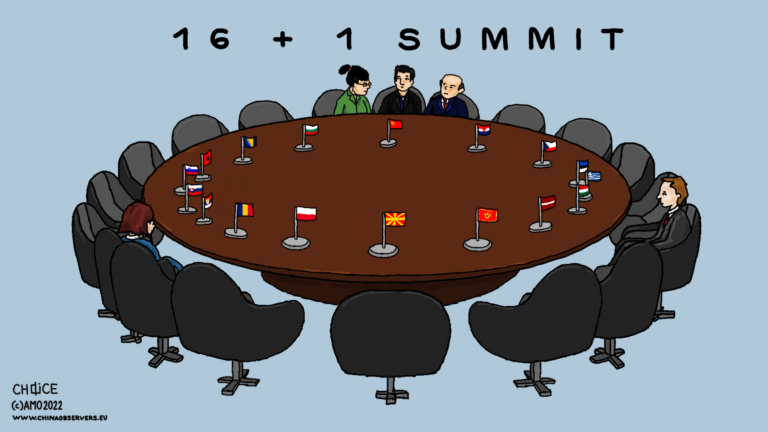
Xi Jinping’s proposals for a more ‘democratic’ world stress sovereign equality and respect for differences. Yet in its own neighborhood, Beijing behaves as though some sovereigns are more equal than others. Its civilizational rhetoric and focus on ‘great power responsibility’ turn seeming relativism into a hierarchy that serves leaders like Vladimir Putin, because the logic that legitimizes China’s de facto sphere of influence in Asia does the same for Russia in Europe.
Beijing bundles its plans to reshape the international order under the concept of the Community of Common Destiny for Mankind (CCDM), a term that arose during the transition between Hu Jintao and Xi Jinping in 2012–13 as Beijing took a more active role in shaping the global system. Xi has turned this concept into the overarching framework for what now amounts to four ‘Global Initiatives’ – Global Development Initiative (DGI), Global Security Initiative (GSI), Global Civilization Initiative (GCI) and Global Governance Initiative (GGI). Beyond these initiatives and their operational limits, the CCDM is founded on the Marxist ideological conviction that the epochal shift away from US hegemonism – supposedly underway now – should be accompanied by moving the international system away from Western universalist norms.
The Great Promise of Equality and Non-Interference
Whether due to anti-colonial sentiment or autocratic convenience, there is genuine desire among many non-Western governments for an alternative order with more room for their political systems. The spectacle of Xi’s grand Tianjin summit of the Shanghai Cooperation Organization (SCO) last September was a potent symbol of the appetite for non-Western options. Although countries’ enthusiasm for joining the development-oriented BRICS+ has various motivations, the wish for alternative value systems is one of them.
The four Global Initiatives under the CCDM are supposed to deliver these alternatives. In 2021, Xi launched the GDI at the UN General Assembly, a forum dominated by development-focused countries, building on the ideas of the Belt and Road Initiative (BRI). In 2022, Xi launched the GSI at the Bo’ao Forum for Asia, a conference meant for Asians to address regional concerns among themselves. In 2023, Xi launched the GCI at a CCP dialogue with foreign political parties promoting ‘Chinese solutions.’ The latest addition was the GGI in 2025, launched at the aforementioned SCO summit in Tianjin.
The message from Beijing has been that these initiatives offer equal opportunities to different political systems, give greater voice to developing countries, and reinvigorate a more ‘democratic’ UN system where every country has one vote. Chinese officials are at pains to stress their opposition to spheres of influence and bloc formation. However, it is not just that China’s practice belies its blandishments, since a closer reading of the texts already shows a degree of hierarchical thinking.
Recreating Spheres of Influence from First Principles
Although Beijing rejects the term, it is recreating the notion of spheres of influence from first principles. Underlying the relativist Chinese pitch to the wider world lies a less relativist story for the country’s friends and neighbors: the common destiny that Beijing claims to share with the Global South is leading the transition to a fairer world order, overcoming the remnants of a Western colonialism that victimized them all.
Within Asia, this story is expressed in civilizational terms. It is most clearly visible in the phrasing used for the CCDM’s GCI. The GCI has practical use as a way to bind foreign elites, but its ideological content suggests that diversity is respected between civilizations, not within them. If civilization is a unit, then states inside become provinces of the core. This is bad news for Asians, since the CCP gives itself the right to define what the values of that civilization’s core are.
Chinese leaders’ thinking in terms of spheres is clearer still in the security-focused GSI. The underlying worldview was clear in Xi’s 2022 announcement of the GSI. In the same speech to China’s regional forum, the Chinese leader told “outsiders” to the “great Asian family” to avoid bringing instability. This dates to a more outspoken 2014 speech to an intra-Asian security gathering in which Xi Jinping not only presented a precursor of the GSI’s security concept but also stated that Asian affairs were for Asians to solve.
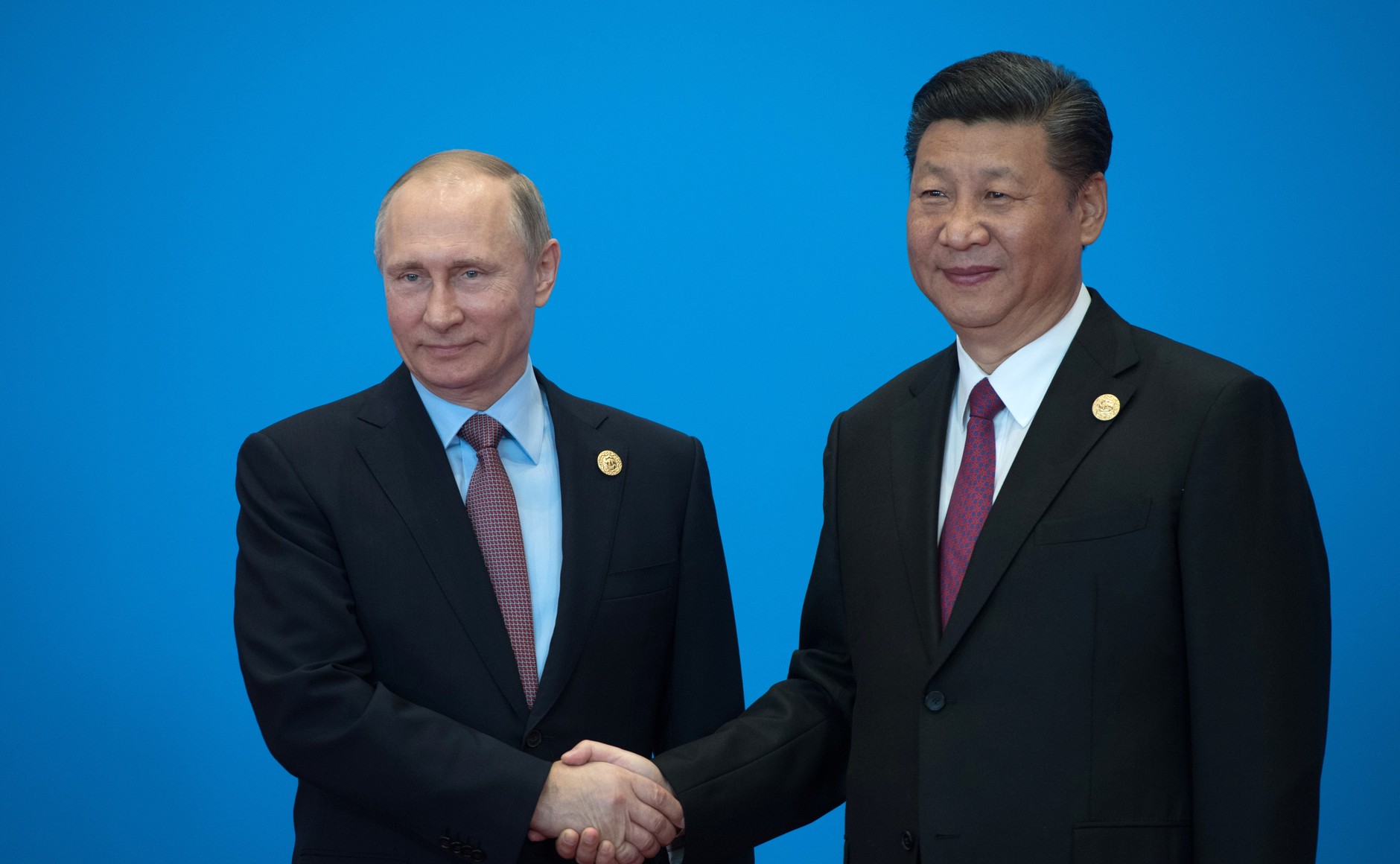
More concretely, the GSI enshrines the so-called “principle of indivisible security,” a concept first articulated in the 1975 Helsinki Final Act, when both sides of the Cold War in Europe sought a modus vivendi. It was later expanded through the Charter of Paris and the OSCE’s Istanbul and Astana declarations with the notion that no state should build its security at the expense of another. Xi endorsed indivisible security in the Sino-Russian joint statement on February 4, 2022, three weeks before the full-scale invasion of Ukraine that Putin legitimized by reference to these ideas.
In practice, it means that a state’s security choices are conditional on a bigger neighbor’s comfort. The nominal equality of states is subordinated to the “reasonable security concerns” of the nearest great power. As David Arase has argued, Chinese support is not a coincidence but deliberate mirroring: by adopting Putin’s reasoning, Beijing asserts a parallel Chinese prerogative in Asia.
Great-Power Responsibility as Paternalism
The CCP’s diplomatic ideology – known as “major-country diplomacy with Chinese characteristics” – is full of talk of equality, yet its texts return again and again to the “special responsibility” of great powers. Such talk may sound like restraint but functions as privilege. The most infamous slip of the mask came in Yang Jiechi’s 2010 barb to Singapore: “China is a big country and other countries are small countries, and that is just a fact.” As the former senior Indian diplomat Vijay Gokhale notes, the very phrase “major-country diplomacy” betrays a hierarchy of nations in which non-peers cannot expect their interests to count equally.
‘Responsibility’ slides easily into paternalism. Beijing’s rhetoric of an ‘Asian family’ is not an accident. Its 2023 report on China’s peripheral diplomacy again cast “responsible power” China as a member of that family. This reflects the turn of Chinese diplomacy under Xi toward the country’s neighbors, as diplomatic data confirms. The romanticized Chinese historyof a regional tribute system with a benevolent Beijing at the center does not bode well for how Chinese leaders see these familiar ties.
Greater attention for the region is strategic. Beijing argues for the importance of peripheral diplomacy on the grounds that a stable and friendly neighborhood is a precondition for achieving the Chinese Dream. The flipside of the ‘care’ for neighbors that flows from this is greater interference. It is not just Taiwan and the South China Sea claimant states that notice this, but also democracy activists in Cambodia and Myanmar. Beijing also uses lawfare to constrain Japan. The revival of ‘Asian values’ language in interactions with Southeast Asia is its normative element, with Xi telling regional partners in 2025 that these values should be the region’s guiding principles.
Two Risks for Europe
That Beijing seeks a measure of regional hegemony has been observed for some time. However, Europe should pay attention to the ideological project behind the practical steps that expand Chinese control over Asia. The clear limits to China’s relation with Russia are less important than the overlap on international order. In particular, this carries two risks.
The first risk concerns changes to the rules-based international order that the EU pledges to uphold. Beijing claims leadership of the Global South and presents its own groupings as the true ‘international community.’ Europe may dismiss the alternative value system on offer, but Beijing does not need European consent as it uses its ‘global majority’ to shape the international order’s defaults. It builds majorities in UN bodies, rewrites norms, and sets the terms developing countries sign up to. Europe’s preferences get displaced without ever being debated.
The second risk is the Russian behavior in Europe that this order legitimizes. Xi’s logic of great-power responsibility both justifies Beijing’s cooperation with Russia – as it effectively leaves Europe at Moscow’s mercy – and normatively underwrites Putin’s claim to special rights in Russia’s ‘near abroad.’ Indivisible security already props up Moscow’s claim to a veto over neighbors’ bids to join the EU and NATO. In the future, it could underwrite a global condominium of great powers in which Europe’s own security arrangements become negotiable between capitals that are not European.
None of the above requires Beijing to recognize Russia’s annexations in Ukraine, which it has pointedly declined to do as it affirms the sovereignty and territorial integrity of “all countries.” Beijing need not endorse Russia’s land grab to underwrite the logic behind it. When Xi offers equality among sovereigns, the question is always who gets to be equal to whom. The answer changes with the ‘neighborhood.’ In 2020, Singapore’s then-Prime Minister Lee Hsien Loong diplomatically expressed his country’s fear of being locked up in a Chinese half of the Pacific. Europeans should share that same fear.
Written by

Sense Hofstede
sehofDr Sense Hofstede is the Head of AMO’s China Team Brussels Office and a China Analyst. He is an expert in the influence of the Chinese party-state on foreign policy, cross-Strait politics, and the Indo-Pacific. He has completed his PhD in Comparative Asian Studies at the National University of Singapore and has previously worked as a Lecturer at Leiden University and a Research Fellow at the Clingendael Institute.