Where Does CEE Stand on China? It Depends Where You Look
On September 11, CHOICE presented the pilot Central and Eastern European China Policy Audit 2025–2026 at a closed-door online seminar. During the discussion, the authors of the audit, Ivana Karásková, Selena Orly, and Konrad Szatters, examined how CEE policies vis-à-vis China have evolved since Donald Trump took office in early 2025.
Where Does CEE Stand on China?
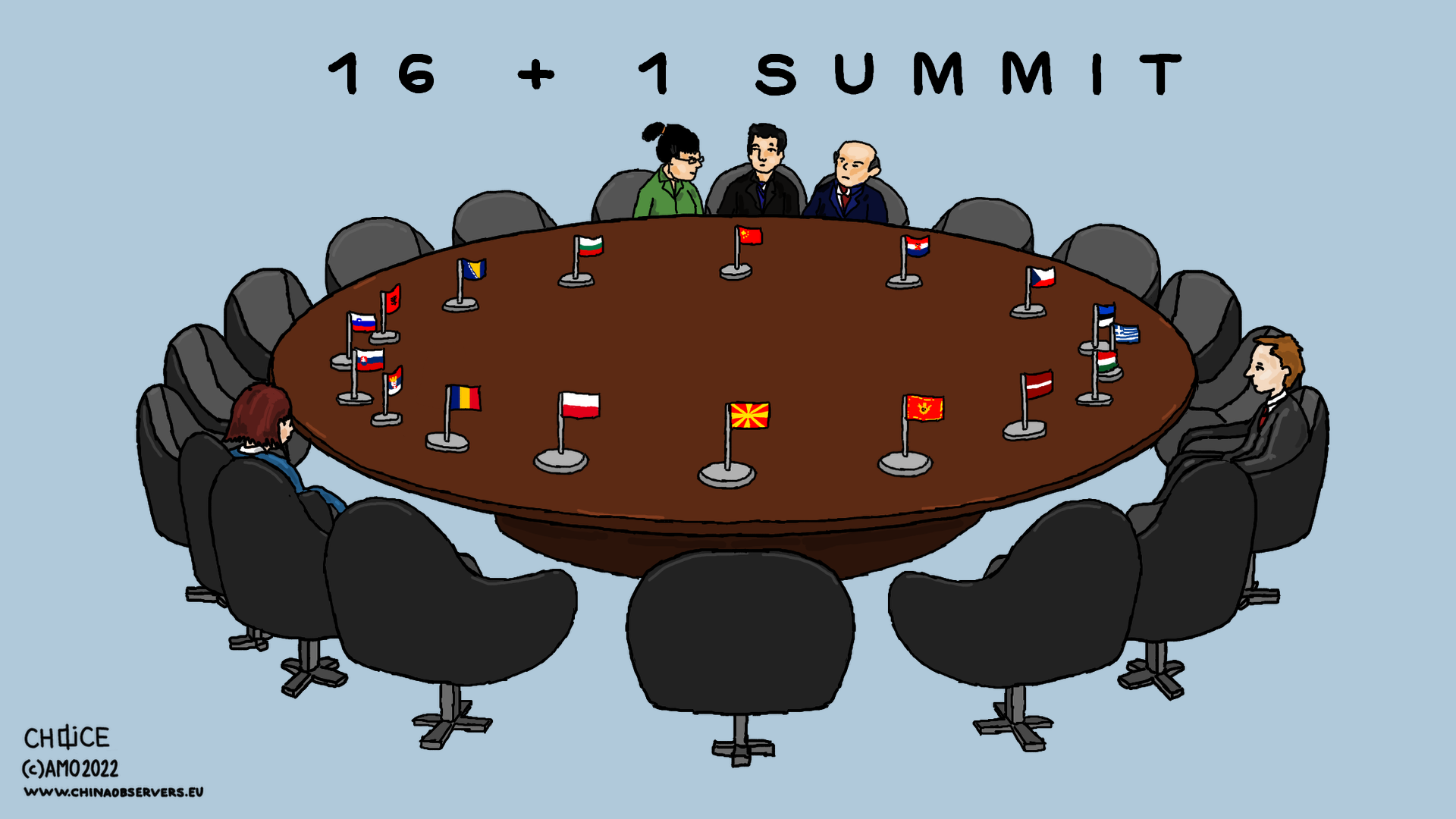
As Ivana Karásková put it, “the short answer to where CEE stands on China is: it depends on where you look.” The notion of CEE as a coherent political or analytical bloc is itself contested, and its prominence in broader Europe-China relations has been shaped in part by Beijing’s approach to the region. CEE became particularly visible in Beijing’s foreign policy through the now-dated “16+1” platform, later expanded to “17+1,” and ultimately reduced to “14+1,” with limited engagement from most participating countries.
The countries in CEE differ considerably. The 19 countries covered by the audit include EU and non-EU, as well as NATO and non-NATO states. They also vary in terms of their economic, political, and security exposure to China.
The audit grouped the countries into five analytical categories, which were introduced during the launch event. These include: political openers (Serbia and Slovakia); transitioning countries (Hungary); structurally constrained countries (Belarus, Kosovo, and Ukraine), whose room for maneuver in foreign policy is limited; countries where security considerations dominate their relations with China (Czechia, Estonia, Lithuania, Poland, and Romania); and pragmatists (Albania, Bosnia and Herzegovina, Bulgaria, Croatia, Latvia, Montenegro, North Macedonia, and Slovenia).
The authors highlighted that shifts between these categories can happen due to changes in countries’ leadership. Yet despite rapid rhetorical shifts that can be observed in certain cases, the economic or strategic relations with China change much more slowly. The discussion also highlighted that CEE governments at times might change their China policy not necessarily because they believe the previous one was substantively wrong, but rather as a way of signaling a break with the previous government’s policy to domestic voters.
The recent changes in US behavior on the international stage have further prompted shifts in some countries’ perception of China. Closer engagement with Beijing may therefore be motivated by a desire to hedge against overdependence on the US.
Poland’s Cautious De-risking
The Q&A session that followed the authors’ presentations further showed that most CEE countries’ policy toward Beijing cannot be easily placed within a single ‘pro-China’ vs. ‘anti-China’ spectrum. Poland is a case in point. Its trade relations with China are heavily unbalanced, with imports from China amounting to 18 times the value of Polish exports. China’s support for Russia in its aggression against Ukraine also increasingly places Beijing within Poland’s broader security concerns. Nonetheless, this has not pushed Poland toward a fully hawkish stance – similar to the one taken by Lithuania in the past – but rather toward calibrated and cautious de-risking efforts. Poland’s approach is therefore better understood through this lens rather than as outright hostility, as maintaining working relations with Beijing remains important for Warsaw.
At the same time, Poland has been developing closer economic and political ties with Taiwan. The discussion, however, cautioned against automatically interpreting this as a fundamental change in Poland’s China policy, as cooperation with Taiwan is driven predominantly by economic logic, Poland’s ambition to move up the value chain, and Taiwan’s own efforts to diversify its partnerships.
The Western Balkan Differences
The discussion also highlighted Croatia, North Macedonia, and Kosovo as examples of how similar external factors can produce different outcomes.
While Croatia and China reaffirmed intentions to deepen ties in 2025, this did not result in a dramatic change in the overall tone of the relationship. On the other hand, North Macedonia’s case demonstrated how diplomatic interactions with Taiwan can generate strong reactions from Beijing without necessarily leading to a lasting deterioration in relations.
Kosovo represents a particularly interesting case of a structurally constrained actor. Although the country has no formal diplomatic relations with China, Beijing has sought to build a presence through neighboring countries’ diplomatic networks, local contacts, and trade and cultural exchanges. This demonstrates that the absence of formal diplomatic relations does not necessarily mean an absence of Chinese interest or engagement.
Serbia and Slovakia: Same Category, Different Trajectories
Although the audit places Slovakia and Serbia in the category of political openers, the authors stressed that this classification does not imply that their approaches to China are identical. Serbia has deeper military and economic exposure to China, while Slovakia remains firmly embedded in the EU and has not demonstrated the same willingness to challenge the Western frameworks. Robert Fico has been studying the political strategy developed by Viktor Orbán and Aleksandar Vučić, but has not fully adopted it.
The upcoming months and next year will bring several elections across the region, including in Serbia and Slovakia, potentially creating future shifts in CEE countries’ China policies.
As the first edition of the audit, this study provides a baseline for assessing how CEE countries’ approaches to China evolve amid a period of significant geopolitical change and uncertainty. CHOICE intends to conduct a follow-up edition next year to examine these developments over time. Extending the scope of research beyond CEE to other regions of Europe is also being considered. We welcome expressions of interest from potential donors seeking to support this research, as well as from researchers interested in collaboration.
Written by

CHOICE
CHOICE is a multinational consortium of experts providing informed analysis on the rising influence of the People’s Republic of China within the countries of Central and Eastern Europe (CEE).