Aleksandar Vučić’s latest visit to China did more than reaffirm a familiar partnership. It signaled that Serbia-China cooperation is shifting into strategically sensitive sectors, including technology, artificial intelligence, robotics, and energy – at the very moment when Serbia’s EU accession process is losing credibility.
For analysts watching the region, the visit raises a sharper question than usual: not whether Belgrade is formally abandoning the EU path, but whether its deepening alignment with Beijing is making that path structurally more difficult to walk.
New Modalities of Cooperation
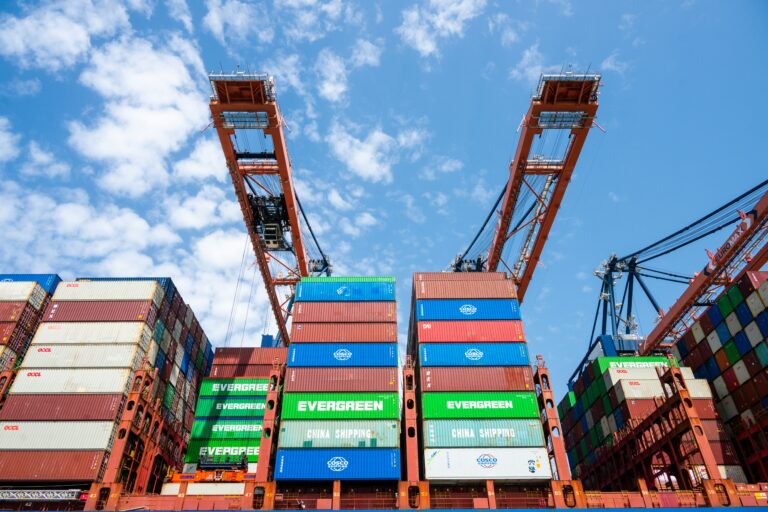
Over the past 15 years, China has become one of the most visible external actors in the Western Balkans through infrastructure. Serbia has been the central case. The Belgrade-Budapest railway, the Smederevo steel mill, Zijin’s investments in Bor, and Linglong’s tire factory in Zrenjanin all contributed to the perception of China as one of Serbia’s most important economic partners. In political terms, these projects also helped the Serbian leadership present Beijing as a fast, pragmatic, and reliable alternative to what it frequently describes as the slow and demanding EU model.
Vučić’s last visit suggests that the center of gravity is shifting. Infrastructure remains part of the agenda and Chinese companies continue to participate in projects across the region, including those financed through commercial loans, direct budgetary funding, or special legal arrangements such as infrastructure connected to Expo 2027. What has changed is the political symbolism of the relationship: roads, railways, and bridges no longer define its future as clearly as technology, innovation, and advanced industrial cooperation do.
According to the Chinese Ministry of Foreign Affairs’ readout of the visit, the two sides signed more than 20 cooperation documents spanning political relations, economy and trade, science and technology, education, legal affairs, and culture. Serbian officials also announced around €953 million in new Chinese investment commitments, including projects in automotive manufacturing, advanced technology, artificial intelligence, robotics, and industrial production.
These announcements should be read in the context of recent investment trends. Serbia has been the leading destination for Chinese foreign direct investment (FDI) in the region, with annual flows surpassing €1 billion between 2022 and 2024. In 2025, however, this changed. Chinese investment effectively stopped, and more capital flowed from Serbia to China than vice versa. Seen against that background, the promised €953 million is politically important but economically more ambiguous. It represents announced commitments rather than confirmed capital inflows, and it is lower than Chinese FDI Serbia received in each of the peak years between 2022 and 2024.
With that context in mind, the agreements signed during Vučić’s visit confirm that a new phase of cooperation is underway. There were no contracts for infrastructure projects in the classical sense and no new loan agreements for Chinese companies to implement projects in Serbia. What was signed instead was a series of agreements in technology, artificial intelligence, nuclear energy, and research and development. Rather than signaling a new wave of Chinese engagement in purely financial terms, the visit points to a relationship that is reorienting toward new sectors while contracting in overall investment intensity – a shift that is very much in line with China’s new 15th Five-Year Plan.
For Serbia, this creates real opportunities. New investment in advanced manufacturing and technology could support industrial modernization, generate employment, and help move the economy beyond low-cost production. But this new phase also generates different forms of dependency. Cooperation in AI, robotics, digital infrastructure, research, energy, and nuclear development reaches deeper into the regulatory and strategic architecture of the state than road-building ever did. Roads and bridges are politically visible, but digital and technological systems can be politically consequential for decades.
Beijing’s Political Vocabulary
The political language of Vučić’s visit is as significant as its economic content. Chinese President Xi Jinping stated that, since his 2024 state visit to Serbia, the two sides had jointly opened a new chapter in building a China-Serbia “community with a shared future” in the new era. During Vučić’s latest visit, the two sides signed a joint statement on continuously promoting and building that community, as well as on jointly advancing the implementation of China’s four global initiatives, which are designed to place Chinese concepts at the center of international debates on development, security, civilization, and governance.
The EU does not officially endorse these frameworks. Since its 2019 strategic outlook on China, the EU has defined China simultaneously as a partner, an economic competitor, and a systemic rival – a framing that reflects a fundamentally different understanding of Beijing’s global role. When Serbia, as an EU candidate country, signs political documents built around Chinese strategic vocabulary, it does more than deepen bilateral cooperation. It associates itself with a diplomatic and ideological framework that Brussels does not share – even though the EU remains Serbia’s main trading partner, leading source of investment, and largest donor.
This captures the central paradox of Serbia’s position. Serbia’s economy remains anchored in Europe, while its political signaling increasingly points in other directions. That gap does not automatically end the accession process, but it makes Serbia’s claim to be moving toward EU membership less persuasive.
The EU Track Narrows
Serbia’s accession process has been stalled for years. Serbia has not opened a new negotiating cluster since December 2021, and its repeated attempts to open Cluster 3 have failed to secure consensus among EU member states. This is not a merely technical problem. It reflects a broader crisis of trust in which many EU actors no longer accept Serbia’s declared European orientation as sufficient evidence of actual convergence.
The European Parliament Committee on Foreign Affairs (AFET) draft report makes this explicit. It calls on Serbia to demonstrate its geopolitical orientation toward the EU by fully aligning with the EU’s Common Foreign and Security Policy, especially restrictive measures adopted in response to Russia’s war against Ukraine. It also conditions accession progress on measurable and sustainable advances in the fundamentals cluster, covering rule of law, the fight against corruption and organized crime, judicial independence, media freedom, and public administration reform.
Foreign policy alignment remains the clearest indicator of the gap between Serbia’s formal EU orientation and its actual behavior. According to the International and Security Affairs Centre (ISAC) annual review of Serbia’s alignment with EU foreign policy declarations and measures, Serbia improved its overall alignment rate to 67 percent, but this still ranked among the lowest among EU candidate and partner countries, except for Türkiye, Georgia, and Armenia. The same review notes that Serbia continued to avoid aligning with most declarations and measures directly or indirectly related to Russia and China, and failed to align with 17 EU declarations related to the war in Ukraine – 10 related to restrictive measures against Russia and 8 against Belarus.
The EU’s Growth Plan has made the consequences more visible. Designed to accelerate economic integration with the EU single market while conditioning financial support on reforms, the plan has already hit friction in Serbia’s case. European Western Balkans reported that payments from the Growth Plan were halted because of backsliding in the judiciary, and that Serbia would not receive further financial support until the issue was addressed.
This matters for the China dimension. When Belgrade presents Chinese investment announcements and technology cooperation as proof of international confidence, it does so at the same time as EU financial support is being questioned or withheld. China cannot replace the EU economically, but it can give Belgrade diplomatic validation and investment announcements at moments when Brussels is applying pressure.
A Balancing Act with Fewer Hiding Places
The answer to whether Serbia is drifting from the EU is therefore necessarily nuanced. Formally, Serbia is not abandoning EU accession. It remains economically, geographically, and institutionally tied to Europe. The EU is still its main trading partner, investor, donor, and regulatory reference point. No Chinese investment announcement changes that structural reality.
But Vučić’s visit shows that Serbia’s balancing act is becoming harder to sustain. In the past, Belgrade could present cooperation with China mainly as a development argument: infrastructure that Serbia needed and the EU was too slow to provide. That framing was never entirely convincing, but it was politically effective. Today’s new phase is different. Unlike infrastructure, strategic technology cooperation shapes the rules, standards, and dependencies of Serbia’s future economy.
What makes Serbia’s position distinct is not the existence of economic relations with Beijing, as other candidate countries also maintain economic relations with China, but the political context surrounding them: stalled accession negotiations, weak reform momentum, low alignment on Russia-related measures, and the adoption of Chinese strategic language such as the “community with a shared future.”
The result is not a clean geopolitical break but a growing and increasingly visible contradiction. Serbia wants the benefits of gradual EU integration without the political discipline that comes with it. It wants Chinese investment and diplomatic support without acknowledging that cooperation in strategic technologies creates new forms of dependency. It wants to remain an EU membership candidate while preserving a foreign policy that treats alignment with Brussels as optional, transactional, or reversible.
That space is narrowing. If the EU’s new enlargement approach becomes more credible and more conditional, Serbia’s room for strategic ambiguity will shrink further. China’s role in Serbia is not replacing the EU. It is making Serbia’s European path less credible. The old model of cooperation with Beijing built infrastructure; the new one risks building dependencies in sectors that will define Serbia’s future orientation far more durably. Vučić’s visit did not move Serbia out of Europe, but it made clearer how far Belgrade has moved from acting like a country that intends to join it.
Written by

Stefan Vladisavljev
vladisavljev_sStefan Vladisavljev is CHOICE Visiting Fellow. He is also the Program Coordinator of the Serbia-based non-governmental organization Foundation BFPE for a Responsible Society. He analyzes Chinese presence in Central and Eastern Europe with a special focus on Serbia and the Western Balkans.