The clock is ticking as Brussels and Beijing head toward the European side’s October deadlines for the trade dialogue and its new instruments. While the June summit of the European Council failed to establish deterrence in the EU’s trade relationship with China, it took place in a period that confirmed a meaningful shift in Europe’s security and economic language on China. Beijing’s challenge is to recognize that the cumbersome EU is genuinely moving, while the challenge for the EU is that if it moves too slowly, its determination goes unseen.
The coming weeks will be revealing. Although Ursula von der Leyen is not expected to unveil the new diversification and solidarity instruments during her State of the Union address on September 16, details are coming out already. This month, a Franco-German roadmap to tackle China’s unfair trade practices is due. On the diplomatic side, Trade Commissioner Maroš Šefčovič plans to meet his counterpart Wang Wentao in Beijing in October, and the European Council reconvenes on October 15.
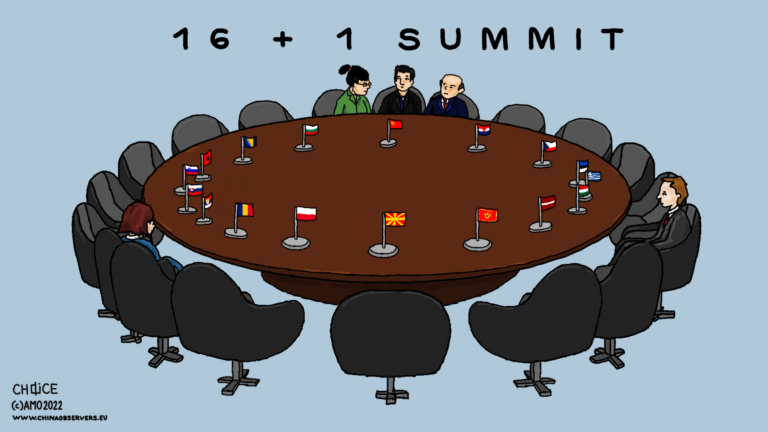
An increasingly securitized understanding of the relationship with China on the EU side collides with the Chinese economic struggle to dominate the new industrial ecosystem. It is yet to be seen if some European leaders will once again veto new moves – in line with the trend of member states wresting control over policy initiative from the Commission. But Chinese hopes for member state sabotage might be dashed as the seemingly arcane documents described below are how the EU’s machinery moves forward.
Economic Shift Fails to Deter for Now
Expectations had been building ahead of the summit of EU leaders on June 18-19. Analysts already felt a new mood in Brussels during the weeks leading up to the European Council gathering. The lag in national capitals was real, symbolized by the opaque reference to “global macroeconomic imbalances” in the agenda and conclusions. Council President António Costa did not even mention China by name in his concluding press conference.
Yet Costa’s remarks did include two China-related assignments. The European Commission had been told “to continue engaging in a constructive dialogue with our main economic partners” and to develop new instruments “to defend its interests and derisk its economic relations in the current context.” This was enough to mandate EU officials to start preparing, and enough for some to float emergency import curbs.
The dialogue between Commissioner Šefčovič and Minister Wang has drawn much attention. Both sides agreed on four workstreams, and Brussels has set a unilateral October deadline for serious progress. Actions are being prepared in case the deadline is not met, while work on the new instruments goes on. In October, the Commission returns to the member states with its evidence of how far Beijing has moved and with its responses ready for approval. By making future EU actions conditional on Chinese behavior, Brussels has put the ball in Beijing’s court.
Yet Beijing’s propaganda dismisses the idea that China needs the European market. The Ministry of Commerce published a report rejecting overcapacity concerns. Beijing proved it plays tough with immediate “countermeasures” against the European defense industry in response to the EU’s 21st Russia sanctions package with a serious message that failed to register in many European capitals. The only concession was Wang Wentao’s reported offer of purchase agreements, which do not address the structural problem. The shift in the EU has been real, but it clearly has not landed in Beijing quite yet.
The changing language marks a new era from the eurocrat’s perspective. Yet the lack of immediate actions and concrete initiatives to deal with Europe’s epochal economic challenge signals to Beijing that member states do not take this moment seriously enough to follow through. The hedging games national politicians play, inspired by domestic politics, worsen that impression. The EU is a slow beast that is hard to stop once it moves, but that comes with a signaling handicap. In conflicts and negotiations, success depends on the other side being able to read your strength and determination. It also depends on speaking with a clear voice, and Beijing will continue to disbelieve the message while even some national leaders visibly decline to go along.
Security Threat Will Shape Response
The shift in how the EU perceives China, however, is across the board. The security dimension is becoming more important. A month after the European Council, the EU foreign ministers quietly endorsed a remarkable escalation in how China is described. The document they approved called China a “key enabler” of Russia’s war effort against Ukraine. More fundamentally, it described Russia and China as powers that seek “to establish regional dominance and reshape the global order in line with their interests, fostering a return to a sphere-of-influence logic.”
The wording is severe, partially repeating the phrasing used in NATO’s Washington Summit Declaration, though without explicitly mentioning the support for Russia’s defense industrial base that the declaration calls out. The endorsement was not announced publicly, and not all member states seem to fully subscribe to it. However, in this security case as well as the trade concerns, documents like these mandate willing national as well as EU officials to act on it.
Such a harsh judgment will inevitably shape the EU’s attitude to the economic relationship. The EU and member state leaders had already repeatedly insisted to their Chinese counterparts that the PRC’s support for Russia seriously damages the relationship. Europe’s slow-moving institutions take a while to respond. Ultimately, even reluctant states eventually go along when Beijing is not even willing to gesture in the direction of European concerns.
Chinese Overreaction Would Do Brussels a Favor
This hardening matters for October in two ways. First, the securitization of the relationship with China causes Europe to treat the economic challenges as greater threats to national security. Second, whatever economic measures are taken, the member states have endorsed an attitude that cannot give in to retaliation easily. It is widely expected that Beijing will respond coercively to the regulatory steps and new instruments the Commission will present in October. The response will not depend on heads of government alone, or even the Commission: its security component falls to the very foreign ministers who endorsed the July language.
Nonetheless, member states remain the weak spot in the EU’s China policy, especially when national capitals seek an ever-greater role in deciding the policies of the EU and are not always keen to activate the instruments they task Brussels to develop. Yet the Commission is now mandated to do more, so it will do more – even if the substance of its actions will fall short of expectations. That means Beijing’s threatened retaliation will also come. In retaliating, Beijing will look for ways to go around the Commission. However, the securitization of the EU countries’ relations with China means that this is now harder. Even when some are keen to benefit from Beijing, Chinese overreaction in October would more likely stiffen spines among member states seeing harsh action as proof of Beijing’s vision of global order. The worsening economic impact of China’s industry in the EU adds to that likelihood.
The ‘mere’ language changes support Commission actions that could trigger a Chinese overreaction that finally pushes member states to support real initiative. Symbolically powerful moves are necessary to make China and the rest of the world understand the EU’s shift is real, even if Brussels needs to be realistic about the gains that are possible. The diplomatic approach that member states have insisted on is understandable. Yet it carries real costs: it fails to restore the credibility of the EU’s economic deterrence. These costs are only worth it if the outcome in October is serious enough to address Europe’s weakening position in what is more than a trade war – a transition to a new industrial model.
Written by

Sense Hofstede
sehofDr Sense Hofstede is the Head of AMO’s China Team Brussels Office and a China Analyst. He is an expert in the influence of the Chinese party-state on foreign policy, cross-Strait politics, and the Indo-Pacific. He has completed his PhD in Comparative Asian Studies at the National University of Singapore and has previously worked as a Lecturer at Leiden University and a Research Fellow at the Clingendael Institute.