CEE Reception of the PRC’s 15th Five-Year Plan
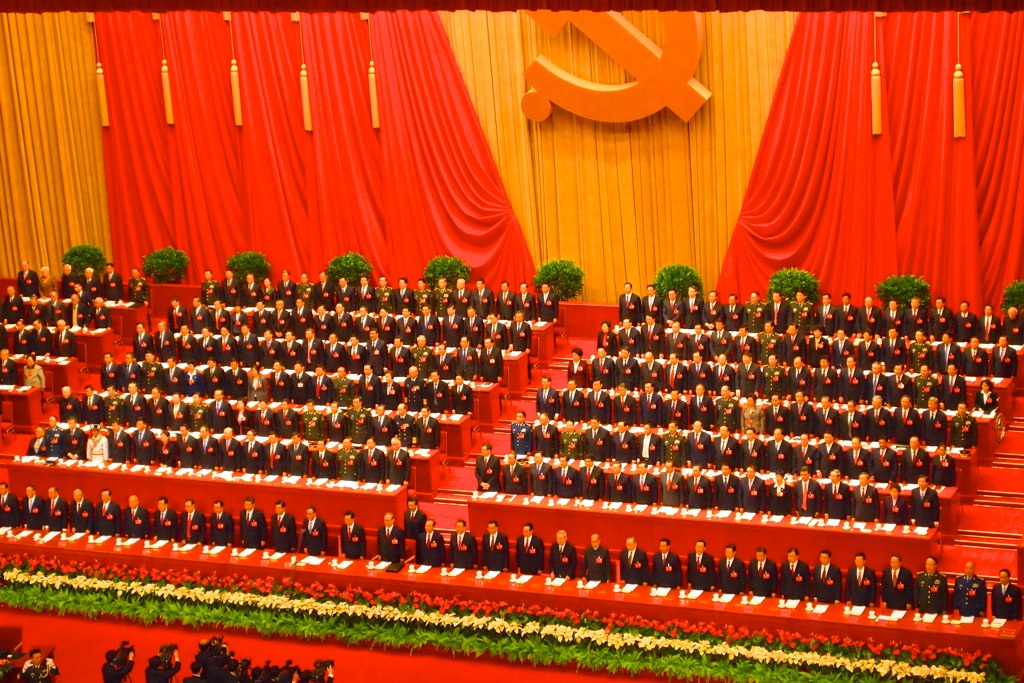
On March 12, 2026, China unveiled its 15th Five-Year Plan (FYP), outlining Beijing’s development priorities for 2026-2030. This article examines how CEE countries reacted to the plan through the prism of their bilateral relations with Beijing. The varied responses outlined below underscore the region’s enduring divisions over China.
Since 1953, the CCP has outlined its vision for the PRC economic development through centralized five-year plans conceptually rooted in an obsolete Soviet model. But recent decades of China’s unprecedented growth have made them globally consequential and closely watched. By 2025, China was the world’s second-largest economy by nominal GDP and the largest by PPP, accounting for 30 percent of global growth. Any meaningful calculation of world economy trajectories now takes Chinese economic planning into account. China watchers have already explained the key aspects of the latest plan and its global impact, but not many have deliberated on the CEE regional reception of its propositions.
CEE is a contested geopolitical grouping whose scope varies across international institutions, encompassing countries with diverging political, security, and economic outlooks as well as relationships with the EU and NATO. China primarily engages the region through its China-CEE Cooperation framework launched in 2012 under Xi Jinping. Although the 16+1 grouping has been rendered marginal by underwhelming tangible outcomes, successive withdrawals, and the broader deterioration of EU-China relations, it continues to shape discussions of China’s regional presence. For this reason, the article focuses on the 16+1 states while also including Kosovo.
Given the region’s political, security and economic diversity, it is unsurprising that CEE states responded to China’s release of the latest FYP in cacophony. Yet despite the varying levels of local commentary, individual countries’ reactions largely mirrored their broader positions toward Beijing, accentuating the region’s divide over China.
Skeptics: Kosovo, Lithuania, Estonia, Latvia, Poland, Czechia, Romania
Kosovo and China do not maintain formal diplomatic relations. China does not recognize Kosovo’s independence – a position grounded in a professed respect for Serbia’s territorial integrity. Kosovo is China-skeptic and views Beijing as an adversary. But recent studies demonstrated that, despite the lack of official ties, China sustains engagement through trade links, local business networks, and cultural exchanges. In 2025 China was Kosovo’s third-largest import partner. Yet there appeared no official or direct media comment on China’s March release of the 15th FYP.
After leaving China’s regional cooperation framework in 2021 and 2022, the Baltic states maintain strained and security-focused relations with Beijing, with Lithuania remaining the most resistant to Chinese influence following the 2021 diplomatic crisis over the Taiwanese Representative Office in Vilnius. China’s March release of the FYP gained little visible traction in Baltic public and official discourse – in Lithuania, Estonia, or Latvia – where discussion on China continued to center on de-risking, technology security, and geopolitical concerns, despite limited Chinese outreach such as the Chinese Ambassador’s Latvian-language promotion of the FYP global economic opportunities.
Similarly, Poland and Czechia uphold a ‘security-first skeptic’ approach toward China that extends into economic policy. Polish Institute of International Affairs warned that the 15th FYP focus on technological self-reliance, industrial upgrading, and state-backed competitiveness could increase pressure on Polish industry and deepen concerns over dependence on China, even as Polish media and business commentary noted limited cooperation opportunities in AI, semiconductors, logistics, and advanced manufacturing. Czech reactions were scarcer but more pragmatic: Chairman of the Board of the Czech-Chinese Joint Chamber of Commerce and Industry praised the plan. Czech business groups and officials continued to meet their Chinese partners to enhance trade and supply-chain opportunities, while media and political figures continued to frame engagement with China through a de-risking lens shaped by concerns over strategic dependence, Taiwan, and Tibet.
Also known as China-skeptic, Romania’s FYP commentary was limited and pragmatic. The Chinese Ambassador to Romania reached out to the public to frame the plan as opening new space for bilateral cooperation, while Romanian business organizations discussed attracting Chinese investment and expanding bilateral logistics and connectivity ties.
Pragmatists: Bulgaria, Albania, Bosnia and Herzegovina, Croatia, Montenegro, North Macedonia, Slovenia, Greece
In comparison with Romania, Bulgaria’s China stance is more pragmatic, but its 15th FYP commentary appears scarcer, even as the Chinese Ambassador urged that the plan offers major collaboration opportunities for the country. One local China analyst portrayed the plan as evidence of China’s confidence in long-term state planning and technological modernization, linking Bulgaria indirectly to the plan through possible trade, innovation, and connectivity cooperation.
Most Western Balkan states’ reception of the 15th FYP reflected their balancing between EU/NATO obligations or aspirations and selective economic engagement with China. This was especially true for Albania, which remains firmly pro-Western but has expanded trade with China, and whose PM Rama publicly supported deeper economic ties between the two countries. Albanian commentary on the 15th FYP itself was scarce. Chinese ambassadorial commentary in Albania’s largest English-language newspaper presented the plan as an opportunity for Albania, while some local analysts separately advocated stronger economic engagement with China.
Bosnia and Herzegovina (BiH) welcomed the plan more enthusiastically. Chinese economic planning was described as offering global stability and “big hope” for small countries, while both the BiH Ambassador to China and the Chinese Ambassador to BiH explicitly translated the 15th FYP into concrete opportunities for Bosnia in renewable energy, agriculture, and digital infrastructure. Their recommendations quickly materialized into action: after the plan’s March release, a large delegation of Chinese firms attended the April Mostar International Economy Fair focused on green energy and infrastructure, a major new plan for investment cooperation was announced in April, and possible new projects in hydropower, solar, wind, mining, and infrastructure were discussed in May.
In 2025, Croatia and China marked 20 years of ‘comprehensive cooperative partnership,’ prompting a wave of high-level meetings, official visits, and new bilateral agreements. China’s March release of the FYP further extended this momentum, with the Chinese Ambassador to Croatia presenting the new economic strategy to Croatian media and public as a framework for deeper bilateral engagement. Similar pragmatism shaped Croatian responses: former President Josipovic, former deputy speaker of the Parliament, and Croatia’s Ambassador to China all praised the plan for creating fresh opportunities for Croatia-China cooperation.
Montenegro’s reception was muted. The earlier debt-trap episode reshaped Podgorica’s engagement with China, but economic ties remain active. Although officials and leaders there made no major public comments on the 15th FYP, they continued meeting their Chinese counterparts in both March and April on infrastructure and investment projects, including a new Bar-Boljare highway agreement and the reconstruction of the Tara Bridge.
After North Macedonian (NM) lawmakers met with Taiwanese representatives from Italy in Skopje in 2025, NM and China moved quickly to repair relations, signaling a mutual desire to avoid the prolonged diplomatic rupture that followed a similar dispute in 1999. NM’s limited but positive reception of China’s 15th FYP reflected this recalibrated pragmatism: Beijing framed the plan’s opportunities around NM development priorities, while Skopje used investment events in Beijing in March to position itself as a potential beneficiary in areas such as trade, green development, and investment.
The repercussions of Slovenia’s March elections are unlikely to significantly alter its treatment of China as a pragmatic economic partner. This continuity was reflected in both official and public reactions to the release of the 15th FYP: the Slovenian Chamber of Commerce and Industry cohosted a briefing on the plan with the Chinese embassy, where business representatives and officials expressed interest in cooperation in key sectors prioritized by China’s new economic planning. Former President Turk likewise welcomed the plan, describing it as a source of stability, confidence, and inspiration amid growing global volatility.
Although commentary remained limited, Greek officials and media unequivocally welcomed the FYP as a pivotal opportunity to strengthen the Sino-Greek comprehensive strategic partnership, focusing on digital infrastructure, green energy, and investment.
Outliers: Serbia, Slovakia, Hungary
An outlier in Western Balkans and the broader CEE region, Serbia, welcomed the 15th FYP with open enthusiasm, reflecting Belgrade’s view of partnership with China as a strategic national choice. Since China declared Serbia its “ironclad friend” in 2024, Serbian officials have framed closer ties with Beijing as central to Serbia’s long-term economic development. In this context, the Serbian Ambassador to China welcomed the plan as a roadmap for deeper cooperation in innovation, high technology, robotics, and AI. Both Chinese officials and Serbian officials, leaders, and scholars see the plan as an opportunity for Serbia – a framework for aligning Serbia’s national development strategy (Serbia 2030) with China’s 2026-2030 development plan and further consolidating their partnership. And indeed, during President Vučić’s May visit to China “more than 30 agreements and memorandums were signed, while investment deals worth around one billion euros were agreed with Chinese partners in the fields of industry, energy, infrastructure, and high technology.”
Under Fico, Slovakia has emerged as one of China’s closest EU partners. The elevation of bilateral relations to a strategic partnership in 2024 significantly expanded economic cooperation. In November 2025, a Slovak delegation met with the International Department of the Chinese Communist Party (IDCPC), where the Chinese side emphasized “high-level practical cooperation” under the 15th FYP. Following Beijing’s March release of the plan, both sides framed it as an opportunity to deepen strategic partnership. The Chinese embassy in Slovakia organized promotional events in March and April, while the Chinese Ambassador called for “synergizing of development strategies.” During a May meeting, Beijing advocated greater legislative exchanges and “strategic alignment” under the FYP. Slovak media and analysts portrayed the FYP as an opportunity for the Slovak economy.
Under Orban, Hungary was China’s closest ally and primary strategic partner within the EU. His defeat in the February 2026 elections is likely to deescalate China’s status on Hungary’s priority list, but, according to a local China expert, unlikely to immediately or entirely change the nature and scope of the relationship. This is represented in a claim that, in relation to the 15th FYP, Hungary is “one of the best-positioned smaller players: a strategic host country, a logistics bridgehead and a political ally at the same time”. Wider public commentary on the FYP was scant, but the Hungarian Institute of International Affairs did frame it as globally consequential.
Contextualizing CEE Responses
Set against a backdrop of deteriorating EU-China relations, the CEE countries’ reception of China’s 15th FYP unfolded amid growing European concerns over trade imbalances, overcapacity, and economic security. The European Commission’s May 29 assessment that “the current state of the trade and investment relationship is not sustainable,” Beijing’s sharp rebuttal, and the forthcoming discussions on stronger trade-defense measures underscore a broader trajectory that is determining China’s relations with EU member states in CEE.
Although only a few months have elapsed since the CCP unveiled its latest economic blueprint, initial reactions across CEE already underscore persistent regional divisions over China. These divergences broadly mirror individual countries’ existing bilateral orientations toward Beijing, with China-skeptic states embedding its FYP within a wider discourse of de-risking and security, pragmatic governments adopting a comparatively more receptive approach, and a small group of outlier states remaining explicitly attentive to its signaling effects. In light of the broader EU-China context, these differences are unlikely to converge in the near term. Rather, they suggest that regional divisions over China may deepen further as EU-level trade and security debates structure the parameters within which CEE states interpret and respond to Chinese economic initiatives.
Written by

Selena Orly
Selena Orly holds a PhD in China Studies and serves as Deputy Lead of the AMO China Team. Her research focuses on modern and contemporary Chinese intellectual history, the translation and amplification of Chinese women intellectuals’ voices through Reading the China Dream project, and China’s engagement with CEE, particularly the Western Balkans.