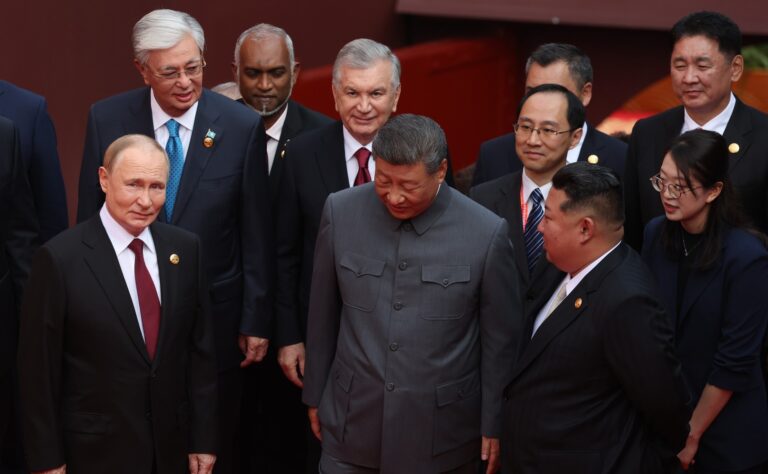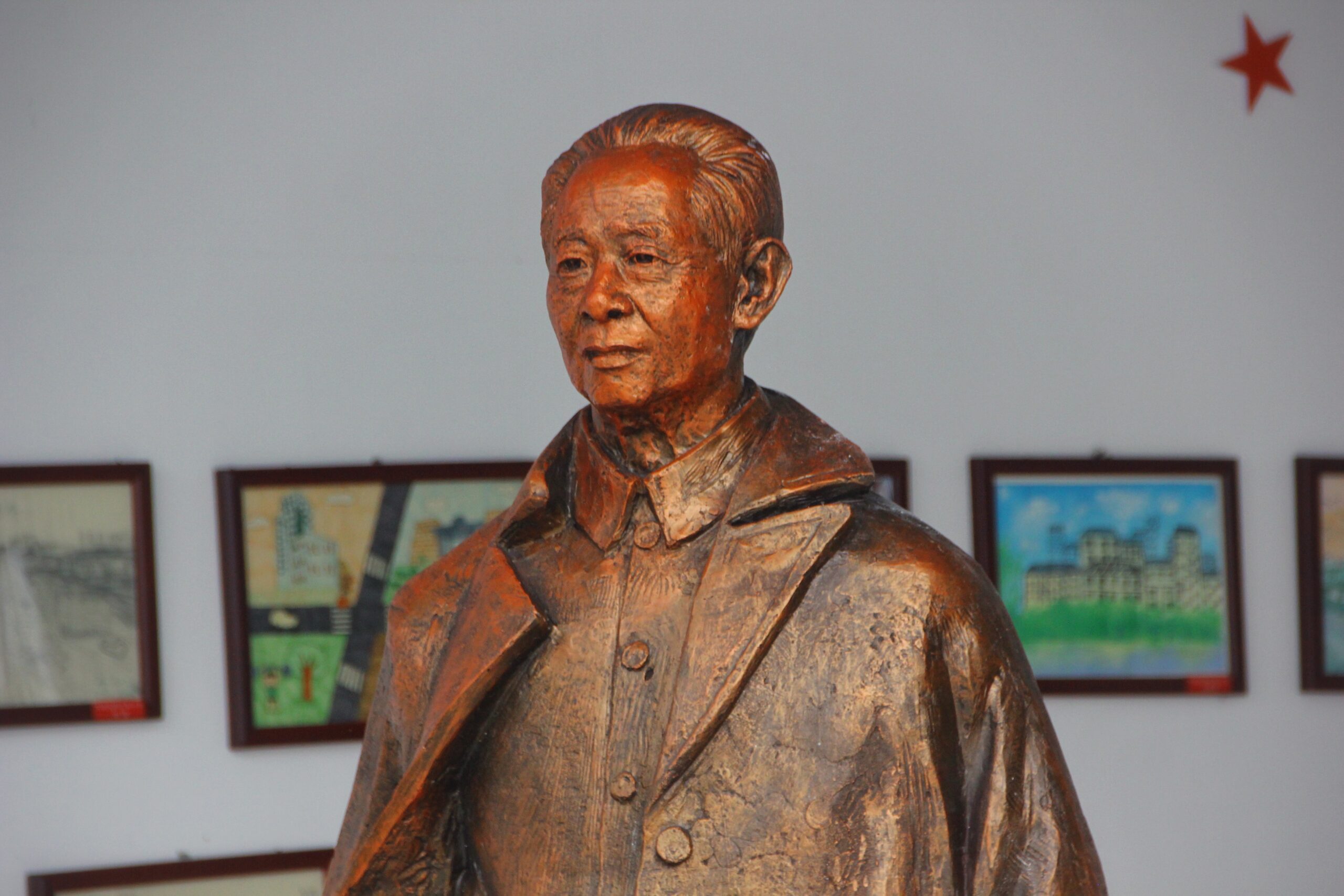
On November 20, in Beijing’s Great Hall of the People, the Chinese Communist Party marked the 110th anniversary of Hu Yaobang’s birth. Xi Jinping’s decision to canonize Hu is not purely retrospective. It comes amid economic slowdown, social unease and renewed political purges, including within the People’s Liberation Army. By reclaiming Hu as a loyal and disciplined reformer, Xi reframes the legacy of the 1980s as a strictly Party-led process aimed at stabilizing the present, not liberalizing the system.
Hu Yaobang: The Reformist Face of the 1980s
Hu (1915–1989) was the veteran revolutionary who, in the early 1980s, rose to become General Secretary of the CCP and, in effect, the political face of Deng Xiaoping’s “reform and opening” within the Party. He fought to rehabilitate the victims of Mao-era campaigns – Xi Jinping’s father Xi Zhongxun among them – promoted younger and better-educated officials and showed unusual tolerance for intellectuals and limited forms of political liberalization. For these reasons, in 1987 he was forced to resign under pressure from conservative Party elders. His death, in April 1989, became the emotional trigger for the student protests that ended in the Tiananmen crackdown.
The bond between Hu Yaobang and Xi Zhongxun sits at the center of this story. Hu and Xi Jinping’s father were political allies and personal friends, key actors in the elite reformist season of the 1980s. This bond was reinforced both by Hu’s role in rehabilitating Xi Zhongxun after years of political purgatory and by Xi Zhongxun’s refusal to join the campaign against Hu in 1987.
Since then, Hu’s memory – especially in reformist circles – has turned into a kind of “conscience of the Party” (to borrow the title of Robert Suettinger’s recent biography of Hu Yaobang) and the symbol of a political reform path that was never taken. This is largely because Hu came to embody both the moral reckoning with the Mao era and the possibility of a reformist trajectory that was abruptly closed after his removal and death.
It is on this terrain that Xi Jinping’s ambivalence plays out today. Hu is, at once, an asset and a problem: a figure who can be canonized as a loyal, selfless and incorruptible revolutionary, yet also the bearer of a legacy of political opening that runs directly against the grain of the current leadership. Xi chooses the path of selective appropriation. He takes up the official assessment crafted in 1989 by Wen Jiabao, then director of the General Office of the Central Committee, and reframes it in a new context. As in Wen’s assessment, discipline and moral rectitude are foregrounded, while Hu’s push for political liberalization is deliberately bracketed and repurposed to fit Xi’s political aims.
A Stage Set for Power
During the 110th anniversary of Hu Yaobang’s birth, from the rostrum, in his three capacities as General Secretary of the CCP, President of the People’s Republic, and Chairman of the Central Military Commission, Xi Jinping delivered a speech calling on the Party to study Hu’s “noble spirit” and “exemplary work style.”
The choice of (Beijing’s Great Hall of the People) as the venue, the invocation of the Central Committee, and the full inscription of Hu into the pantheon of the “great revolutionaries” make clear that this cannot be read as a simple act of remembrance – but rather as a political gesture directed at Party and Army elites at a moment of acute internal turbulence.
In his speech, Xi can be seen performing two moves. First, he canonizes Hu as an exemplary revolutionary, reviving the late-1980s formula and presenting him as a model of loyalty and integrity. Then he distils a set of “virtues” into a code of conduct for today’s cadres: unshakeable faith in communism, “seeking truth from facts” and correcting mistakes, reformist boldness in economic policy, keeping “the people in one’s heart” and ensuring that “benefits are shared by all,” and being fair, upright, clean and strict with oneself and one’s family.
Each of these virtues is explicitly tied to Xi’s agenda: Chinese-style modernization, the “two integrations,” comprehensive deepening of reforms, common prosperity, and the Party’s “self-revolution” through relentless disciplinary control. In this way, Xi seems to appropriate the non-threatening elements of Hu’s reformist legacy and grafts them into the vocabulary of “Xi Jinping Thought” as its red genealogy.
It is a gesture that is at once filial and political. Without ever naming his father, Xi is effectively saying that the line represented by Hu – and indirectly by Xi Zhongxun – is “ours”: not a liberal deviation, but part of the orthodoxy that culminates in the current leadership.
Continuity with 2015
The 2025 commemoration was not a one-off. Xi had already commemorated Hu in 2015 with the first major, systematic tribute delivered as General Secretary. The most recent ceremony revives and repackages that narrative, anchoring Hu even more firmly within the ideological architecture of the “New Era.”
At the same time, the system built by Xi is almost the mirror image of what Hu stood against. On the concentration of power, Party–state relations, the abolition of term limits, and the revival of a personality cult, Xi moves in a direction diametrically opposed to Hu Yaobang’s reformist ideas. Many of the pathologies Hu tried to correct now appear more entrenched than ever.
The official communiqué stresses that “relatives of Comrade Hu Yaobang, friends who knew him in life, and representatives from his hometown attended the symposium.” In the PRC political protocol, this may be read as a clear signal: Hu’s legacy is now considered “safe” and fully reabsorbed into the official canon, without implying any reopening of political space.
What Hu’s Canonization Means for Xi’s China Today
Xi’s appropriation of Hu Yaobang’s legacy may carry direct implications for contemporary Chinese governance. At a time when growth is structurally weaker, youth unemployment remains elevated, and local government debt constrains policy space, Hu is presented, as a symbol of “reform under discipline.” Reform is reaffirmed as necessary, but only within the perimeter of absolute Party control. Within this framing, there appears to be little space for Hu’s political openness, decentralization, or tolerance for dissent.
The message conveyed to today’s cadres appears relatively clear: loyalty, incorruptibility, and execution capacity matter more than innovation or institutional autonomy. Hu can thus be read as a behavioral template for a political class under pressure, not a blueprint for systemic change. At the same time, by publicly honoring Hu and highlighting the presence of revolutionary families, Xi also addresses elite anxieties, signaling ideological continuity amid growing purges and factional insecurity, including within the armed forces.
In light of this backstory and of the recent purges in the People’s Liberation Army, Xi’s speech on Hu Yaobang can be read not only as a retrospective canonization of a reform-era leader, but also as a behavioral manual for today’s political and military elites.
By exalting Hu’s loyalty, his acceptance of Party discipline, his incorruptibility and his concern for “the people,” Xi can be seen as outlining an implicit script for how today’s ruling class should conduct itself. No deviations, no factional games – only obedience to the leader and alignment with his line.
Written by

Emanuele Rossi
de_f_tEmanuele Rossi is an independent analyst focusing on the global connections of the Mediterranean. He is a Senior Fellow at Formiche and Decode39, and an author for the Med-Or Italian Foundation. His work regularly appears in media outlets and think tanks, covering security, international politics, geopolitics, and geo-economics.

Enrico Maria Fardella
FardellaEnricoEnrico Maria Fardella is an Associate Professor in the Department of Social and Human Sciences at the University of Naples ‘L’Orientale’ and Adjunct Professor at the School of Advanced International Studies (SAIS) Europe of Johns Hopkins University. He serves as the Director of the ChinaMed.it Project, Associate Director of the Guarini Institute for Public Affairs at John Cabot University in Rome, and a Global Fellow at the Woodrow Wilson International Center for Scholars in Washington, D.C. He is also an Honorary Life Member of Trevelyan College at Durham University and sits on the editorial boards of the European Journal of East Asian Studies and Orizzonte Cina. Previously, Dr Fardella held the position of Associate Professor at Peking University, where he also served as Director of the Center for Mediterranean Area Studies. Additionally, he was a Fellow of the Science & Technology China Program at the European Commission. His research interests encompass the history of Chinese foreign policy, as well as China’s relations with the European Union, the Middle East, and Italy, from the Cold War to the present.