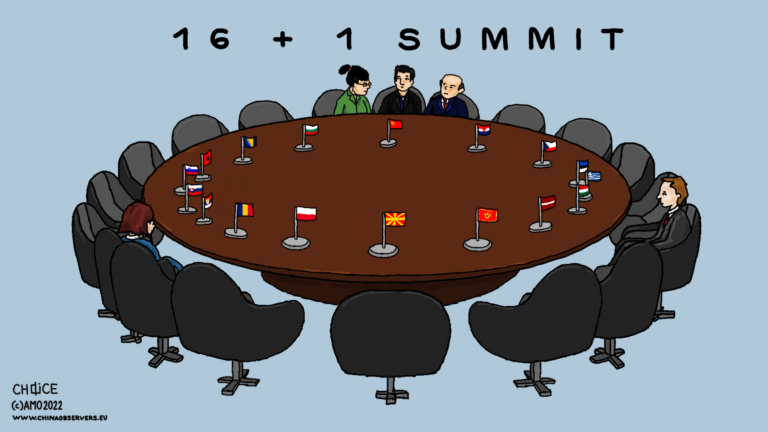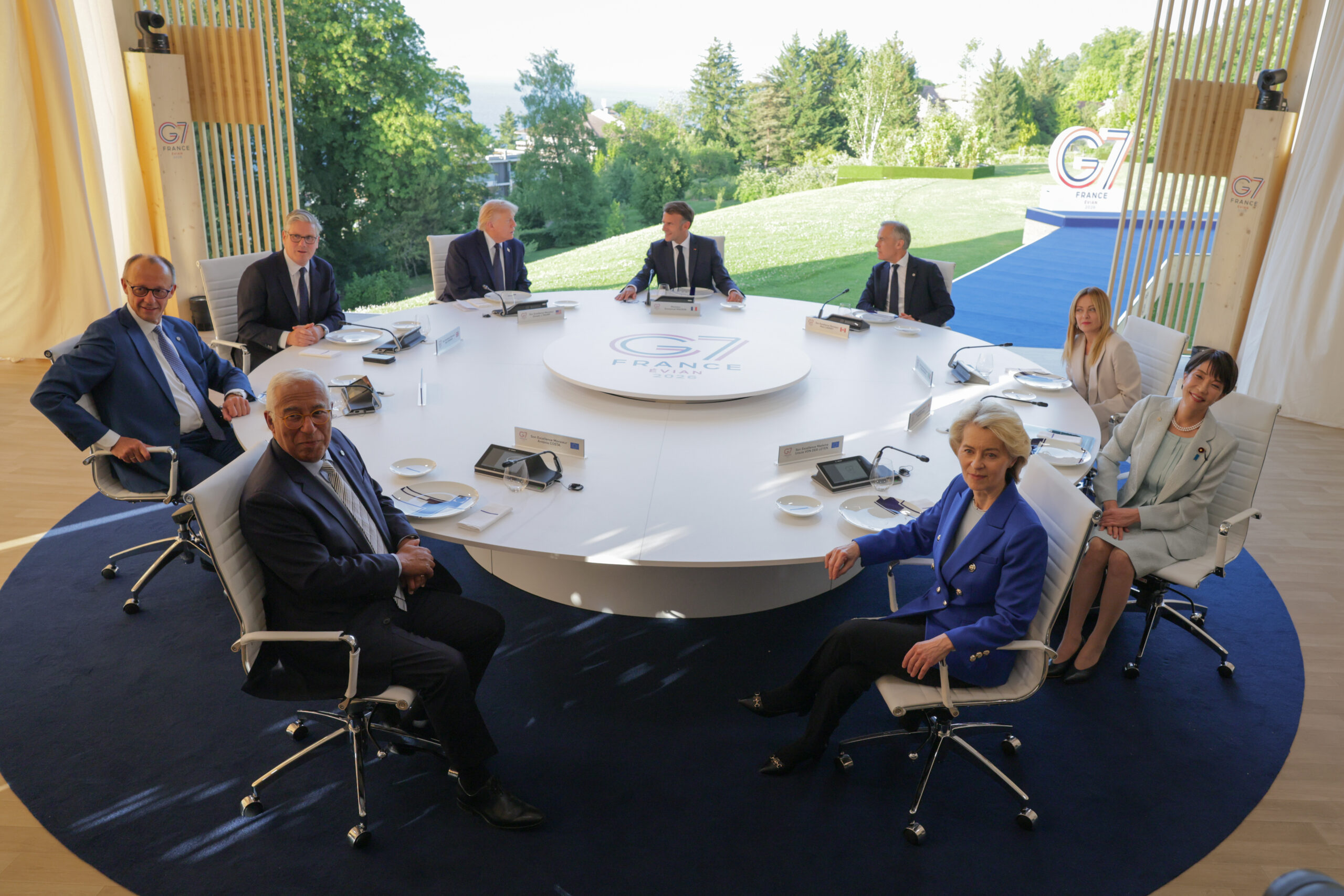
In the span of a single week, China was at the heart of two summits it did not take part in. At the G7 summit in Évian (June 15-17) and at the European Council in Brussels (June 18-19), Beijing was the “elephant in the room.” From the G7 minerals alliance through the EU member states’ demands to the closing statements by European Council President Costa and European Commission President von der Leyen, the message was remarkably consistent: dependence on Beijing has become a problem that can no longer be ignored.
Despite the urgency on display, the two summits maintained a gap between European rhetoric and action on China. The language hardened, the consensus broadened, and the warnings became more direct, but the concrete decisions remained modest, deferred, or left to be drafted at a later stage. Taken together, the week proved that Europe has reached an agreement on the diagnosis of the China Shock 2.0 but remains hesitant about the remedy.
A Minerals Pact Forged Under Strain
The G7 talks in Évian unfolded against a complex transatlantic backdrop. Days earlier, the Trump administration had forced Anthropic to abruptly suspend its most capable AI models, Fable 5 and Mythos 5, for all foreign nationals, knocking European users offline overnight and turning the situation into a wake-up call about the EU’s AI dependency. This took place amid steady American military drawdown in Europe and fed into the discussions on the US security umbrella over the continent becoming less certain than at any point in decades.
However, despite these frictions, the G7 still produced some measurable substance. Leaders agreed to build a critical minerals alliance, a coordination platform with an expanded role for the International Energy Agency, designed to cut reliance on any single supplier below 60 percent by 2030, with an ultimate target of 50 percent. The plan is to open with pilot mechanisms for lithium and nickel and pledges on stockpiling and recycling. The unstated target – China – was obvious to everyone. Beijing controls roughly 90 percent of global processed rare earths and it rattled markets last year by revealing plans to expand export restrictions.
Beijing did not wait long to respond to the G7 initative by defending its export controls as consistent with international practices and urged the G7 to respect market principles. While the G7 had made sure to avoid naming China in its own declaration, Beijing clearly had no similar reservations – responding directly, dismissing the G7 for imposing “rules of small cliques,” and making clear that it does not intend to moderate its posture in response to Western pressure.
A Broader Consensus, but a Postponed Response
In Brussels, the discussions on China were more intense. Beijing was arguably one of the hottest topics of the European Council summit, and for once the EU’s biggest economies seemed to pull in similar directions. France, Germany, Italy, Poland, and the Netherlands called for new tools to raise tariffs and quotas and to oblige companies to find alternatives to Chinese imports.
The summit’s outcome, however, was more restrained than the debate. Rather than act directly, leaders asked the Commission to assess its trade defense toolbox and “eventually” develop new instruments, including a country-agnostic diversification instrument that von der Leyen may be expected to present at the State of the Union speech in September. A more direct trade confrontation was, in effect, postponed. The EU’s official framing sought to reconcile two positions at once: that assertive action is urgently required, but also that the strategy of “de-risking, not decoupling” and the crucial position of dialogue with China are to be preserved.
The summit also marked the European Council debut of Hungarian Prime Minister Péter Magyar, whose recent election victory ended 16 years of Viktor Orbán’s rule, and many hoped his arrival would smooth the path to consensus at the European level. Indeed, it helped on Ukraine, but not on China. Spanish Prime Minister Pedro Sánchez seemed the predominant force in that regard, not only declining to back a tougher line but describing Beijing as EU’s “potential ally” – a striking difference when compared to other member states and an important reminder that the EU’s unity on China is perhaps less solid than its official rhetoric suggests.
The Dream of Plaza Accord
One of the more interesting interventions at the European Council summit came from the German Chancellor Friedrich Merz. He stated that the Chinese yuan is undervalued by 30 percent, well above the IMF’s estimate of around 16 percent, and accused Beijing of “flooding markets” through heavy subsidies and a currency that, as he put it, “is not freely convertible.” His proposed remedy was a historical one: a new Plaza Accord.
This reference reaches back four decades. In 1985, the US, Japan, West Germany, France, and the UK met at the Plaza Hotel in New York and agreed to depreciate the US dollar primarily against the Japanese yen and the German mark. The goal was to reduce growing US trade deficits and ease pressure on American industry. It worked, mechanically at least, and the dollar depreciated sharply over the following two years, although economists continue to debate how much the Plaza Accord itself contributed to improvements in the US trade balance.
The trouble is that today’s situation is significantly different. Japan, though greatly pressured, signed Plaza Accord voluntarily, and the US-led Western world of 1985 was far more cohesive than now. As in the past, a currency pact with Beijing would require at least a partly willing Chinese counterpart and a more decisive West – and last week demonstrated that neither of these are likely. Necessary as such an arrangement might be, it seems to remain, for now, a conceptual reference point.
The Deeper Problem of the EU’s Unity
That another confrontation with China was quietly deferred is, on its own terms, understandable. The EU member states depend on Beijing in quite uneven ways and thus prefer different approaches. France favors the tariff-and-restriction approach. Germany, Italy, and the Netherlands have long preferred to secure access to the Chinese market rather than provoke retaliation. Spain has been getting closer to Beijing more openly. Poland, for its part, sits among the hawks but with eyes fixed predominantly on Russia and security. Almost all member states agree that something must be done, but all seem equally afraid to pull the switch.
The mood at the European level, in the end, was captured less by the actions or communiqués than by a senior diplomat reflecting on the summit. “Back in November, we were talking about how the China situation was intolerable and how we had to take action,” the official told the Financial Times. “And here we are again, talking about the same thing.” It seems that until the EU and its members decide that the cost of acting is lower than that of deferring, this sentence is likely to be repeated at the next summit, and perhaps the one after that.
Written by

Konrad Szatters
Konrad Szatters is a China Analyst at AMO, focusing on China’s political discourse and foreign policy. He also serves as a Lead Researcher for the Ukrainian Heritage Diplomacy in China at the University of Canterbury in New Zealand. Previously, he gained experience at the College of Europe in Natolin, the Polish Diplomatic Academy, and the Embassy of Poland in Beijing.