CHOICE Newsletter: China, Everywhere on Europe’s June Agenda
Dear reader,
June has once again proved that China is no longer a side issue in Europe’s strategic debates. From the EU Foreign Affairs Council to the G7 Leaders’ Summit and the European Council, Beijing appeared across discussions on economic security, critical minerals, industrial overcapacity, supply chains, and strategic dependencies. The language may still be careful – sometimes so careful that China manages to be everywhere in the debate and nowhere in the conclusions – but the debate is moving in a clear direction.
As summer begins, our team will be taking turns disappearing for a few days of holiday, preferably somewhere with shade, ice, and (hopefully) no urgent China affairs. But we are not switching off completely. New content will continue to appear on the CHOICE website throughout the summer, so do keep following us – not least because surviving heatwaves is easier with good analysis and a cold drink.
Wishing you a calm summer,
Ivana Karásková, CHOICE Founder and Team Lead (based in Prague)
CHOICE Quick Takes
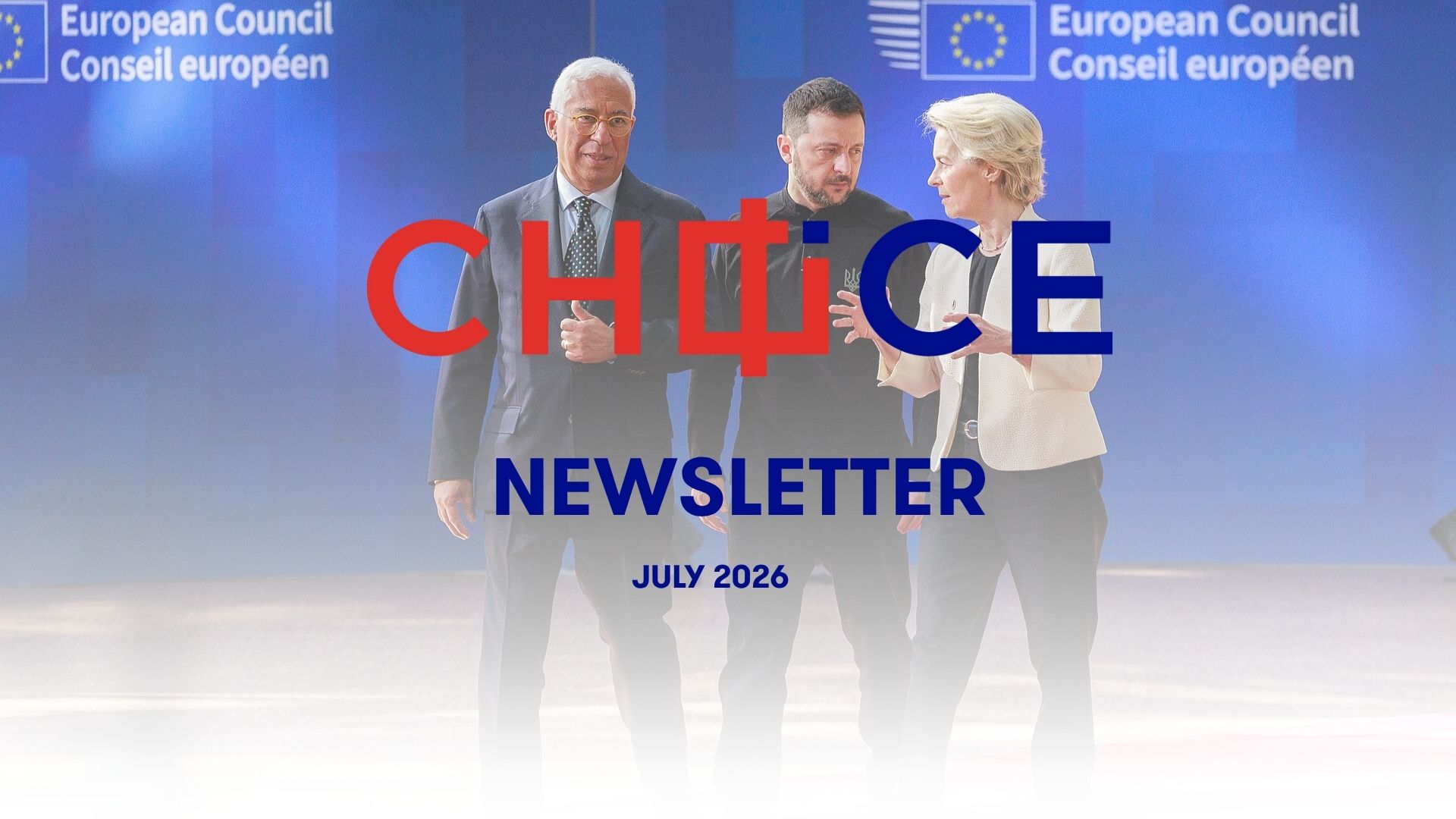
China was at the center of Europe’s strategic debates in June. It featured prominently in discussions at the EU Foreign Affairs Council in Brussels (June 15), the G7 Leaders’ Summit in Évian-les-Bains (June 15-17), and the European Council meeting in Brussels (June 18-19). Across these forums, policymakers focused on economic security, critical minerals, industrial overcapacity, market access, and the risks associated with strategic dependencies on China. Although no major new measures were announced, the discussions underscored Europe’s growing emphasis on de-risking and supply chain diversification. We invited two experts to offer complementary perspectives: one examining the broader trajectory of Europe-China relations, and the other focusing on the implications for CEE.
Selena Orly, AMO China Team Deputy Lead
The European Council’s China Mandate: More Theater Than Resolve

Alicia Garcia-Herrero, Senior Research Fellow at Bruegel
The European Council’s discussion on China was unusually long – more than two hours – yet it produced the familiar mixture of political signal and diplomatic fog. Leaders gave the Commission a mandate to strengthen defenses against overcapacity and unfair competition. The official conclusions, however, spoke only of “global macroeconomic imbalances,” carefully avoiding any direct reference to Beijing. This was not an accident. It was the lowest common denominator after member states failed to agree on how far or how fast to move.
The divisions were visible. Spain’s Pedro Sánchez remains the most cautious voice, wary of escalation. Germany’s Friedrich Merz, by contrast, has hardened noticeably, denouncing China’s subsidized “flooding” of European markets and even floating the prospect of currency talks in the spirit of the Plaza Accord. Most governments sit uneasily in between, torn between fear of Chinese retaliation and the slow erosion of European industry. The result is predictable: every step forward is hedged, diluted, or postponed.
Europe no longer needs new concepts. The tools – faster use of trade defense instruments, stricter FDI and outbound investment screening, and procurement rules that favor European production where justified – are well known. What is missing is the political courage to deploy them consistently. Without that courage, and without a parallel effort to restore Europe’s own competitiveness through permitting reform, skills, and targeted investment, the latest mandate will amount to little more than another ritual on a trajectory that continues to point downward.
European Council on China and Russia

Paulína Ovečková, CHOICE Analyst
“Global macroeconomic imbalances” was one of the key themes in June’s European Council – yet search “China” in the conclusions and you will find nothing. Although analysts highlight stronger rhetoric and a broader mandate for the Commission to develop new policy tools, China policy continues to be whispered rather than stated, reflecting a persistent reluctance to provoke Beijing. The challenge the EU faces requires both a clear definition and a clear signal to national governments and companies, so that each level understands the strategic direction and can act accordingly – a task that remains unresolved.
Where China revealed Brussels united in caution, Russia revealed the opposite: boldness coupled with visible disunity, not least within CEE. Council President António Costa’s move toward reopening channels with Moscow drew pushback from Baltic leaders, as well as unease from Macron and Merz. Slovakia’s Robert Fico, by contrast, vocally supported Costa’s maneuvr. However, the CEE picture – and Fico’s positioning – could shift further with Péter Magyar in the Hungarian seat, ending sixteen years of Orbán’s pro-Russian, pro-China voice. That would deprive Fico of his closest regional ally, potentially nudging Slovakia toward a more Ukraine-aligned stance and closer to a broader CEE consensus.
CHOICE in Brussels
Hard Security Should Not Be Forgotten as Brussels Centers Economic Security

Sense Hofstede, AMO China Team Brussels Office Head
Following the EU foreign ministers’ discussion of China on June 15, the High Representative for Foreign Affairs Kaja Kallas confirmed that the EU believes Russian troops trained in China have ended up fighting in Ukraine. This followed an AFP report published over the preceding weekend which cited a senior EU official making the same claim. Reuters already reported in May that three European intelligence agencies had reached this assessment. According to the report, approximately 200 Russian soldiers secretly underwent military training, including in drone warfare, as part of an agreement that would also see Chinese troops receive training in Russia.
Europe’s week of June 15 was focused on economic security. The G7 summit and the European Council, which came after the foreign ministers met, both discussed the challenges posed by Beijing’s export model. Yet, the security issue that opened the week served as a stark reminder that China is no longer just a partner, competitor, or rival, but also a direct security challenge to Europe. China’s material support for the Russian war effort is often treated in Brussels as a question separate from the trade and tech discussions. In reality, however, they are intimately linked – as our contributors explained in last month’s newsletter.
Moreover, much like the “China Shock 2.0,” Russia’s war on Ukraine directly affects the EU’s core interests. Beijing would be unlikely to compartmentalize issues affecting its own core interests in this way. Perhaps the EU countries should take a page from Beijing’s book. The consensus in Brussels that there is an industrial challenge to be addressed is palpable – even if agreement on how to respond remains elusive. The awareness of the security threat is less widespread. However, by bringing China’s role in Russia’s war machine to the table, Brussels could strengthen its case for trade measures. If the EU is to tolerate some Chinese export controls, Beijing should crack down on transshipment of European goods to Russia in return.
WiCH Highlights
Ana Krstinovska, our co-chair for North Macedonia, wrote a policy brief on the Western Balkans in Europe’s Critical Raw Materials Strategy. Read it here!
Alicia Garcia-Herrero, our co-chair for Spain, wrote an article on China’s green infrastructure investment. Read it here!
Agatha Kratz, our co-chair for France, co-authored a report on Chinese investment in Europe. Read it here!
CHOICE News
 Ivana Karásková spoke about China-Russia FIMI cooperation at NKK-CHOICE dialogue and commented on Europe’s reaction to a potential G2 scenario at an event organized by Centre for Security Studies at ETH Zürich. She also moderated a panel about Czechia-Taiwan relations at the 4th Annual SCRC International Research Conference organized in collaboration by the Charles University and the National Chengchi University.
Sense Hofstede gave a lecture on the Indo-Pacific at the Netherlands Defence Academy Senior Officers’ Course.
This is the web version of our newsletter. If you’d like to receive the CHOICE newsletter in advance, straight to your inbox, sign up here:
Written by

CHOICE
CHOICE is a multinational consortium of experts providing informed analysis on the rising influence of the People’s Republic of China within the countries of Central and Eastern Europe (CEE).