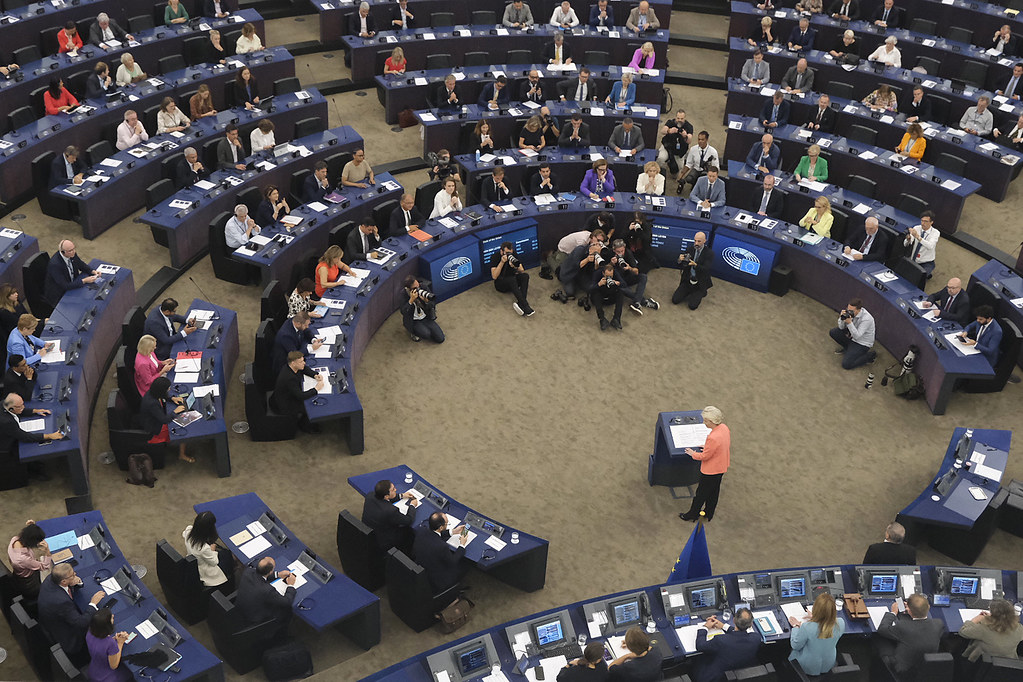
In April, a delegation of the European Parliament’s (EP) Internal Market and Consumer Protection (IMCO) committee returned from a visit to Beijing and Shanghai. It has been eight years since the EP’s last official visit to the country. In May, it will be the EP’s Delegation for Relations with the People’s Republic of China’s (D-CN) turn to fly to Beijing, followed in July by the Committee on Foreign Affairs (AFET), and the Committee on International Trade (INTA) in October.
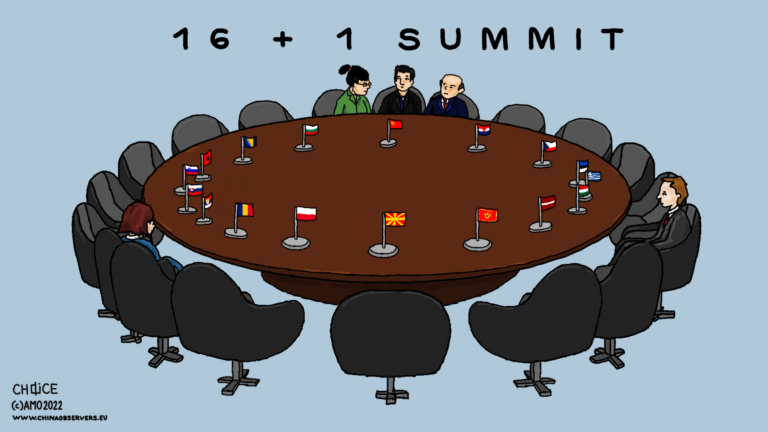
Behind the normalization of relations between the EP and China, Beijing has a clear ambition – to sway parliamentarians toward a softer position on China so as to counter the hardline stance of the EU Commission. In Brussels, as Members of the European Parliament (MEPs) prepare for their delegations’ visits, the IMCO’s experience could serve as a lesson. It demonstrates the need for a strategic coordination of exchanges with China.
The Broader Context of IMCO Trips
This planned succession of official visits to China follows the normalization of relations between the EP and Beijing under the impulse of the EP President Roberta Metsola. Last autumn, the European and Chinese parliaments resumed talks, pushing the reset button after a eight-year freeze and following the lifting of Chinese sanctions against MEPs in April 2025. In addition, the current strain on transatlantic ties has also created a renewed interest for some MEPs to restore dialogue with Beijing.
These visits could therefore be seen as part of a balancing act between the part of the EP wishing to normalize exchanges with Beijing – hopeful about the perspective for constructive and genuine dialogue – and the imperative to show a firm hand on Europe’s interests, as China’s overcapacity is now widely considered as a long-term problem in the EU.
Discussing Trade Issues
The widening trade deficit with China (reaching €359.8 billion in 2025) and the reliance on Beijing strategic sectors have become forefront concerns in Brussels. The IMCO delegation paid particular attention to the recent development in e-commerce pointing to the 4.6 billion small packages which entered the EU from China last year. Goods shipped from the Chinese Mainland now account for 91 percent of all small parcels arriving in the EU with platforms such as Temu, Shein, and Alibaba accounting for a growing share of that volume.
The delegation’s official statement showcased the intention to increase visibility and authority of the EP representatives standing up for EU norms – in this case, “market transparency” and “(EU) consumer rights.” The IMCO chair, Anna Cavazzini, commented that one of the visit’s objectives was to “explain our rules in person.” She also added: “We want to see rapid improvements and we want to ensure that our warnings are being taken seriously by China’s authorities and companies.”
Beijing’s Perspective
Future delegations travelling to China need to remember that Beijing prefers not to deal with the EU institutions. Senior Chinese officials reportedly told visitors from the EU member states that they had little interest in dealing with the Commission, and preferred to concentrate on the member states, showcasing a “dismissive” attitude toward EU institutions.
Yet in Brussels, the PRC’s diplomats have increasingly turned their attention to the Parliament. It has become clear that Beijing grasps the EP’s weight in the EU’s decision-making system and the Parliament insiders reportedly said that Beijing hopes to sway parliamentarians’ positions on China and water-down initial EU Commission proposals through the legislative process. The EU Commission adopts a harder line on China – notably with the Cybersecurity Act revisions planning to increase scrutiny over China-based supply chains, and the Industrial Accelerator Act (IAA), widely read as aimed at Chinese investments in Europe.
When it comes to the EP visits to China, Beijing views them as a signal that “trust is being rebuilt” and as an opportunity to “improve the EP’s understanding of China.” Furthermore, Chinese publications widely present the EP’s visit as both a diplomatic win for China, and a sign of Europeans adopting a more “pragmatic” approach to its ties with the PRC.
“Friendly Tone” with the “Unfriendly” Parliament
It is important to remember that regardless of the reported “friendly” tone of the interactions with Chinese counterparts during the visit, resentment over the Parliament’s past China-critical resolutions (including on human rights violations in Xinjiang, Tibet, and related to Hong Kong and Taiwan) runs deep and has permeated in the Chinese public opinion.
For example, the second most liked comment on a Guancha article – one of China’s most popular and influential online media portals – about the IMCO visit, likens Europeans to “piglets coming [to China] to freeload, and return still squealing.” Another less colorful but equally popular comment asks “have the sanctions related to Xinjiang been lifted? It was the EP’s doing. Secondly, do we have a policy of reciprocal retaliation against Europe to achieve the lifting of sanctions?” This deeply-rooted characterization of the EP as “unfriendly” towards China will not decrease, particularly as the Parliament recently passed a resolution condemning China’s latest ethnic unity law as a violation of international law, immediately sparking Beijing to voice its “strong dissatisfaction.”
Talking with China: Challenges and Remaining Questions
Before leaving for China, the MEPs received thorough security briefs. But merely boarding their planes with burner phones might not be sufficient preparation for those who hope to restart a dialogue with Beijing. During the last eight years of freeze between Beijing and the EP, China’s diplomatic strategies have evolved and the highly-politicized language of Chinese officials has become increasingly complex to decipher.
Beijing and Brussels continue to have parallel conversations, using distinct lingoes to describe their interactions. This is well illustrated by the unmistakably different ways the IMCO delegation’s visit was portrayed by both sides. IMCO talked about an “icebreaker mission” meant to address consumer safety and the “flooding of the internal market” by Chinese products, while Beijing spoke of an opportunity to promote a “sound and steady development of China-Europe relations.”
Recently, Chinese officials have toned down the signature “wolf-warrior” confrontational style of diplomacy of the late 2010s and early 2020s toward a more amicable attitude in dealing with their European colleagues. Yet, according to the author’s conversations with sources within the EP, European parliamentarians continue to report a feeling of “speaking to a wall.” This is, among other things, because the Chinese officials communicate in a scripted, highly politicized, and coded language that requires expertise to decipher.
In Default of Alignment, the EP Must Coordinate
The EP remains deeply divided over China. The parliament’s position paper on Beijing, has been in the works for a year now, but the date of its publication continues being postponed and is still unknown.
This lack of alignment also manifests in personal trips of MEPs to China and their apparent lack of coordination with official visits. Following the IMCO’s official visit, the French MEP and EP vice-president Younous Omarjee travelled to Beijing in his personal capacity. Yet the official communication from the Chinese side presented Omarjee in his function as EP vice-president. Most strikingly, Omarjee met with the PRC’s top legislator Zhao Leji, who – as the third-ranking member of the Politburo Standing Committee of the Chinese Communist Party – greatly outranks the officials who met with the IMCO delegation. The language used in Omarjee’s social media publications about his visit, promoting the “virtues of dialogue to move toward a balanced partnership and act in favor of stability,” ostensibly differed from the firm tone of the IMCO delegation’s official communication.
The EP delegations flying to China thus face a sizeable challenge: display a firm resolution to resolve the structural trade imbalance with China, protect the single market, defend European positions on sensitive issues – namely China’s role in fueling Russia’s invasion of Ukraine – and simultaneously restore normalized exchanges and dialogue with Beijing. The experience of MEPs traveling to China offers a fertile ground for thinking about the ways in which the EU can pursue dialogue with China, but to do so, the EP needs to coordinate on its interactions with China, learn from each visit to prepare the new ones, and finally build on the European China experts’ relevant expertise. This is essential so that the EU visits to China can be strategically thought-out moves, leading to genuine interactions, rather than additional opportunities for Beijing to further advance its agenda.
Written by

Emma Belmonte
Emma Belmonte was a China Projects Analyst at AMO until August 2026, specializing in Beijing’s interactions with EU institutions, and its wider influence on European politics. Emma has been working as a reporter specialized on Chinese speaking regions, has conducted on the ground reporting in both Taiwan and China and written multiple feature articles for publications including Chinafile, GEO magazine, Figaro Magazine and the Green European Journal. She holds a Master’s degree in Modern Chinese Studies from the University of Oxford and a Bachelor’s degree in Philosophy from the Ecole Normale Supérieure de Lyon.