This article was originally published in The Diplomat and is republished here with the permission of the author.
Following the decapitation strike on one of its closest partners, can Beijing still position itself as a credible security actor in the region?
In recent months, the X account of the Venezuelan media outlet Polianalítica, followed by over 63,000 users, published a series of posts portraying Beijing as a steadfast political and security backer of Caracas. On November 24, a post claimed that “China announced it will provide military help to Venezuela if it faces foreign invasion.” Other X users flagged the claim as false, yet the post was reshared more than a thousand times. It generated a large number of mocking responses, as users quickly identified the announcement as ludicrous.
This episode proved both telling and ironic – less than six weeks later, Venezuela’s president was captured in a U.S. military operation. The Polianalítica post was a prime example of the distorted and often exaggerated perception of China’s role as a security actor in Latin America.
This inflated perception of China’s power has also been actively reinforced at the highest levels of Venezuela’s political leadership. While running for reelection as president back in July 2024, Nicolas Maduro confidently spoke at a military parade in Caracas about the security benefits of his government’s partnership with China. Maduro asserted that his alliance with China provided him with “cutting-edge technology, in drone and anti-drone combat” and warned others “not to be mistaken about Venezuela.”
On January 2, 2026, Maduro met with China’s top envoy to Latin America, Qiu Xiaoqi, where the president praised Beijing’s leadership, calling President Xi Jinping a “big brother.” A few hours later, he was snatched away from his bedroom by U.S. Delta Force commandos.
The ties between the two countries, elevated to the rank of “all-weather partnership” in 2024, seemed to provide the Venezuelan head of state with an ultimately false sense of security. Over the last years, Beijing has increasingly promoted its image as a global security actor and, as stated in a recent policy paper, it means to make security and military cooperation a priority of its future engagement with Latin American countries.
But following the decapitation strike on one of its closest partners in the region, can Beijing still position itself as a credible security actor in the Western Hemisphere?
Will Latin America Rethink China Ties?
Latin American countries have long been struggling for full sovereignty, and the United States does not have a great reputation in this regard. China’s strategy has capitalized on these tensions so far. However, if the United States is determined to force a binary choice, this strategy might no longer be viable. On January 7, addressing Venezuela’s interim president, Delcy Rodriguez, the Trump administration demanded that the country cut ties with rival powers and expel official advisers from China, Russia, Cuba, and Iran.
The new threat of U.S. strikes and use of force might make Latin American countries (and perhaps the Global South as a whole) reassess their relations with China, making Beijing’s position and credibility in the region increasingly vulnerable.
First, the benefits of engaging with China are facing new questions. Chinese air-defense systems installed in Venezuela were ineffective and Beijing reportedly “had no idea” about the operation. Putting that together with China’s response, which did not extend beyond statements, Chinese support for Latin America’s sovereignty seems to be mainly rhetorical, and its partners would be right to question the tangible impact of enhanced security ties. Beijing had underscored the importance of security and defense cooperation with Latin America in its 2016 Policy White Paper. Now its self-painted image as the new global security actor has taken a steep hit, and that might hinder its political leverage in the region.
Even worse, it appears that China’s active presence in a country is not only unhelpful in deterring U.S. military intervention, but it even raises risks. The 2025 U.S. National Security Strategy hinted at countering China’s influence in the Western Hemisphere: “The terms of our alliances, and the terms upon which we provide any kind of aid, must be contingent on winding down adversarial outside influence – from control of military installations, ports, and key infrastructure to the purchase of strategic assets broadly defined.”
The goals behind Operation Absolute Resolve, as the United States dubbed its military operation in Caracas, were multifaceted. But one clear aim was to counter China’s growing sway over Latin America. Observing the operation and the fallout, neighboring countries mostly responded with condemnation of Trump’s actions. Rumors that Columbia and Cuba are “awaiting their turn” have not diminished, with President Donald Trump making customarily provocative statements. When asked about the possibility of targeting Columbia next, the U.S. president responded: “It sounds good to me.”
As Latin American countries redo their risk calculus, a recalibration of relations is thus probable. It’s too early to tell how much U.S. actions will hurt Beijing’s commercial interests in the region – China is currently either the number one or number two trading partner for most Latin American countries. But at the very least, a temporary cooling of political and military engagement might be expected.
Mapping China-Latin America Defense Ties
China has in the last years pushed to be recognized as a global security actor, and that included a push to increase security and military cooperation with Latin American countries. Probably in response to the U.S. naval buildup in the Caribbean since August 2025, China published its latest policy paper on the region last month, after a long period of silence on this front. The new document emphasized that “China has always stood in solidarity through thick and thin with the Global South, including Latin America and the Caribbean.”
Besides the extended focus on various details of trade and development relations, a distinct part of the document elaborated on Beijing’s “peace program,” focused mainly on implementing China’s Global Security Initiative (GSI), military exchanges, and cybersecurity cooperation.
According to a recent report by the Center for Strategic and International Studies (CSIS), China’s most frequent defense cooperation in Latin America between 2022 and 2025 has been with Brazil and Argentina. In Brazil, exchanges span all three military branches: the army, air force, and navy. Meanwhile, Argentina has participated in all of the large China-Latin America training programs. The two countries are in the process of signing cooperation frameworks on academic exchanges between the National Defense University of Argentina and China’s own National Defense University. However the actual influence of such programs is estimated to be low, according to research led by the U.S. Army Foreign Military Studies Office in 2024.
Beyond military diplomacy, China has various types of security-related cooperation with Latin American countries, ranging from equipment and arms sales to joint training. In 2025, Venezuela continued to lead the region in purchases of Chinese arms, a trend driven by Washington’s 2006 ban on all commercial weapons sales to Caracas. Chinese military exports to the region have also included aircraft, ground vehicles, radar systems, assault rifles, and other hardware sold to Argentina, Bolivia, and Ecuador. Meanwhile, Cuba has worked to deepen its military relationship with China by welcoming People’s Liberation Army personnel for port calls and training exercises.
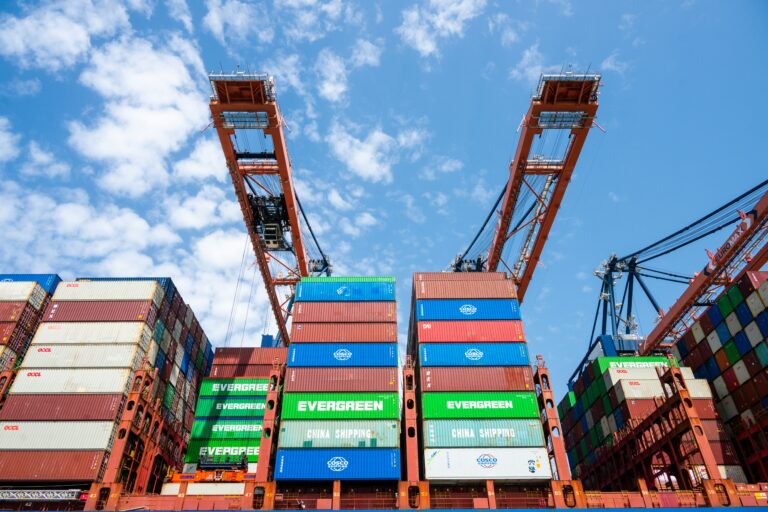
That being said, China’s most strategic operations in the Western Hemisphere actually rely on its extensive dual-use infrastructures in Latin America. A notable example is the Peruvian port of Chancay, operated by China Overseas Shipping Company (COSCO), a company sanctioned by the U.S. government for its close ties to the PLA. Dual-use infrastructure could be leveraged by China for military purposes in the case of an invasion of Taiwan and/or major conflict with the United States.
While China-Latin American cooperation has expanded until now, the recent events might cause Latin American countries to change course. The United States has dramatically upped the perceived costs of close ties to China – and Beijing’s inaction has eroded the perceived benefits. If relations between Latin American countries and China deteriorate, the fate of its dual-use infrastructure projects would surely be a critical concern for China.
A recent article by China’s state-owned outlet Global Times illustrated that China’s options are quite limited. Global Times described the best strategy as simply waiting. The argument is that with time, the United States’ hardline measures will strengthen Latin America’s consensus around sovereignty and anti-hegemony. This will bring about momentum for regional and multipolar development, in which cooperation with “extra-regional players” will be preferred to deter attacks. However, in the short term, as the worry about Trump’s next move grows, deepening cooperation with China is increasingly seen not as a deterrent, but rather as escalatory.
Written by

Paulína Ovečková
Paulína Ovečková is an analyst at China Observers in Central and Eastern Europe (CHOICE) and MapInfluenCE projects. She specializes in Chinese foreign policy, political economy, media influence, migration, and China’s engagement in the Global South. She holds master’s degrees in Chinese Studies and Economic Policy and International Relations from Masaryk University, gaining professional experience as a media analyst and researcher in the private sector, and at the Slovak Economic and Cultural Office in Taipei.

Emma Belmonte
Emma Belmonte was a China Projects Analyst at AMO until August 2026, specializing in Beijing’s interactions with EU institutions, and its wider influence on European politics. Emma has been working as a reporter specialized on Chinese speaking regions, has conducted on the ground reporting in both Taiwan and China and written multiple feature articles for publications including Chinafile, GEO magazine, Figaro Magazine and the Green European Journal. She holds a Master’s degree in Modern Chinese Studies from the University of Oxford and a Bachelor’s degree in Philosophy from the Ecole Normale Supérieure de Lyon.