China’s Multi-Vector Engagement in Bosnia and Herzegovina
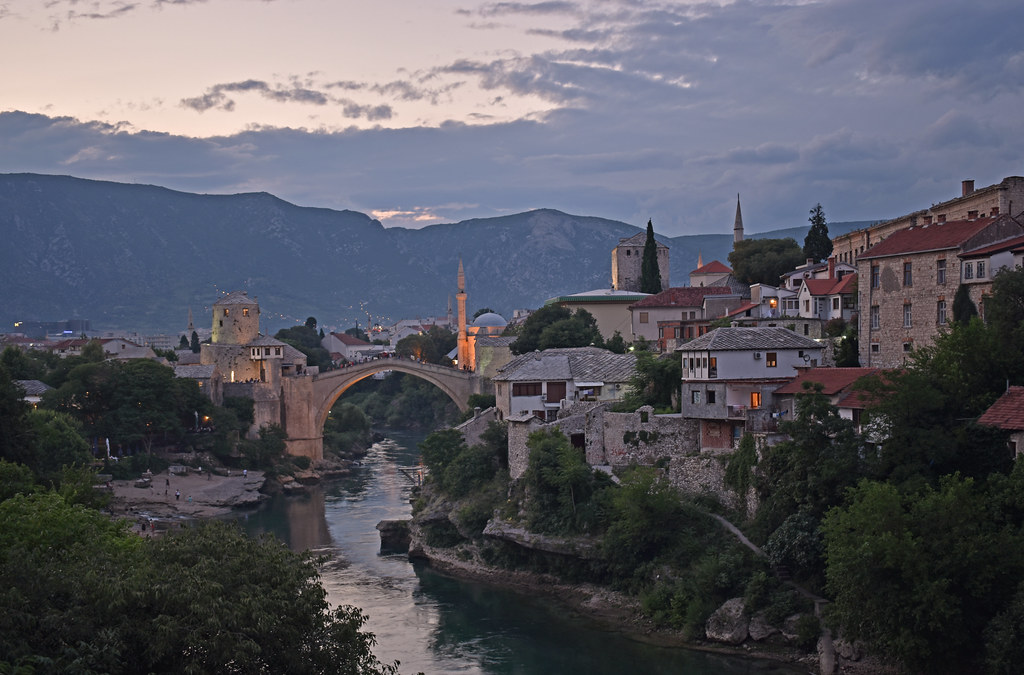
As the traditional “northern corridor” for Eurasian trade diminishes in significance due to the war in Ukraine, the Western Balkans are gaining strategic importance as a key segment of the “middle corridor.” Within this shift, Bosnia and Herzegovina (BiH) has emerged as one of focal points for Chinese engagement. As Beijing transitions from a narrow focus on credit-based infrastructure to a sophisticated multi-vector strategy, it is effectively exploiting the fragmented institutional architecture of BiH to establish a long-term alternative to the normative influence of the EU.
The Economic Engine and Fragmented Institutions
The presence of China in BiH is most visible through massive infrastructure projects financed by Chinese loans and executed by state-owned firms reaching a total value of $10 billion. While China ranks 19th in terms of total foreign investment, accounting for only 0.6 percent of the total, it has emerged as the country’s largest partner in Asia and its third-largest exporter recording a 15 percent investment growth in 2024. This discrepancy between low direct investment and high project value highlights a strategy centered on debt-based financing, which allows Chinese state-owned enterprises to dominate the construction sector while local taxpayers bear the long-term financial risk.
Beijing has skillfully managed the ethnonationalist divisions of the country to secure opaque deals in both entities. In Republika Srpska, this includes an ambitious portfolio of infrastructure projects such as the newly opened €103 million Doboj hospital and ongoing highway sections including Banja Luka-Prijedor, valued at €297 million, and the Bijeljina-Brčko stretch at €76 million. In the Federation of BiH, the focus has also shifted toward strategic transport corridors. This is evidenced by the Sarajevo tramway renovation and critical segments of Corridor Vc, most notably the Počitelj-Zvirovići intersection which features the landmark Herzegovina bridge. Distributing projects across entity lines, Beijing ensures that it remains an indispensable partner to all major political factions regardless of their internal disputes.
However, a common thread across all these deals is a systemic lack of transparency that frequently bypasses standard public procurement norms. Authorities in both entities often grant significant extensions on deadlines and award additional ‘secret’ works to Chinese contractors without competitive bidding. This practice has recently resulted in four court verdicts against the Government of Republika Srpska regarding the withholding of contract details for the Banja Luka-Prijedor highway.
Alignment with the 15th Five-Year Plan
The evolution of Chinese energy and infrastructure projects in BiH reflects a calculated strategic shift in Beijing’s 15th Five-Year Plan, which prioritizes high-quality development and green transition. This global policy pivot explains the rapidly changing energy landscape in the country. For years, Chinese engagement was synonymous with fossil fuels with the Stanari Thermal Power Plant standing as the most prominent and successful example of this era. However, the high-profile failure of the €700 million Blok 7 project in Tuzla, following Beijing’s 2021 pledge to cease building new coal plants abroad, served as a catalyst for a regional move toward renewables. While the Chinese leadership continues to fulfill legacy commitments such as the €818 million Gacko Thermal Power Plant, the strategic focus has undeniably shifted toward the “Green Silk Road.”
Current investments demonstrate this new alignment with the emphasis of the plan on exporting advanced green technology and new quality productive forces. The €130 million Ivovik wind park and the massive €500 million solar park in Livno represent the new vanguard of Chinese economic presence. These projects allow Beijing to showcase its global leadership in renewable energy while simultaneously securing a foothold in the strategic electricity export market of the Western Balkans.
This shift provides local elites with a powerful alternative to Western integration. Positioning itself as a leader in the green transition, Beijing offers a path to modernize energy infrastructure that bypasses the strict environmental regulations and democratic conditionality required by the EU. This approach allows local governments to meet rising energy demands and international climate goals while maintaining the opaque procurement processes and elite-centered decision-making that characterize Chinese partnerships in the country.
Navigating Political Alliances as a Strategic Hedge
Beijing expands its influence primarily via elites and the business community while not making overt political demands. This strategy is particularly evident in Republika Srpska, where the Chinese leadership has built strong ties with the ruling Alliance of Independent Social Democrats. Supplying financial support and infrastructure development, Beijing provides local elites with a strategic hedge against Western-led reforms.
This relationship also manifests on the international stage, where China positions itself as a status quo power. In the United Nations Security Council, China has supported the positions of Republika Srpska through non-recognition of the current High Representative Christian Schmidt and vote against the Srebrenica Resolution in 2024. The recent hint of the China Railway Engineering Cooperation moving its regional headquarters from Warsaw to Banja Luka further signals that Beijing views Republika Srpska as a reliable hub for its regional operations.
Soft Power and Grassroots Legitimacy
Beyond hard assets, China is investing heavily in soft power to bypass political fragmentation and build grassroots legitimacy. BiH is one of only four countries within the “14+1” framework to host more than one Confucius Institutes, having centers located in both Sarajevo and Banja Luka. These institutes provide free language courses and scholarships supported by 10 Chinese teachers currently operating at the University of Banja Luka. The reach of the educational programs extends into the public school system as five primary and two secondary schools now offer Chinese courses in Republika Srpska.
Alongside these educational programs, a rising number of local NGOs are actively promoting stronger diplomatic and cultural bonds between both countries. Among the most prominent are the “Belt and Road” association, which publishes the “Voice of China” newsletter, and the “Bosnian-Chinese Friendship” association. These organizations act as intermediaries that translate high-level diplomatic goals into local narratives. Cultural and health diplomacy have also bolstered this image in recent years. For instance, during the COVID-19 pandemic, Beijing donated 500,000 Sinopharm vaccines to the country. This timely delivery filled a gap left by delayed Western aid at the moment allowing China to position itself as a reliable partner in times of crisis.
Furthermore, the visa-free regime established in 2018 has enabled a significant tourism boom, which resulted in more than 100,000 Chinese tourists visiting BiH in 2025 alone. This figure represents a remarkable growth of 54.7 percent compared to the previous year and injects immediate capital into the local service sector fostering direct contact between the two states. All these soft power efforts aim to create a favorable public environment that views Chinese influence as a pragmatic partnership for modernization instead of a geopolitical threat.
Redesigning the Geopolitical Equilibrium
As BiH’s progress toward EU accession is ongoing, the multi-vector cooperation with Beijing may create a complex dual-track reality. While the EU remains the country’s primary target, China offers a pragmatic modernization that allows local elites to bypass the democratic and environmental conditions required by Brussels. This creates a geopolitical equilibrium where political actors in BiH attempt to reap the benefits of EU integration, such as market access and institutional stability, while utilizing Chinese capital and technology to hedge against the political costs of Western-led reforms.
Looking ahead, the challenge for BiH will be reconciling these two diverging models. The first one demands transparency and the rule of law, while the second one thrives on the very institutional fragmentation and opaque procurement processes that EU integration seeks to eliminate. Ultimately, the success of BiH’s European progress may depend on whether it can leverage Chinese investment without permanently compromising the standards required for its European future
Written by

Marko Lončar
Marko Lončar is a political researcher and consultant specializing in European and comparative politics, with an emphasis on Western Balkan integration. A former Fulbright Fellow at George Mason University and Think Visegrad Fellow, he previously served in the Political Section of the EU Delegation in Bosnia and Herzegovina. Marko holds an MA in European Affairs and consults for various CSOs, think tanks, and international organizations, including the Council of Europe and OSCE.