This article is part of a series of articles authored by young, aspiring China scholars under the Future CHOICE initiative.
On January 1, the EU’s Carbon Border Adjustment Mechanism (CBAM) – a levy that prices the carbon embedded in imported goods – flipped from a reporting exercise to a financial obligation. That same day, Serbia enacted a carbon tax of €4 per ton of CO₂ on its heaviest emitters. The timing was not a coincidence, and the gap between those two prices tells the real story.
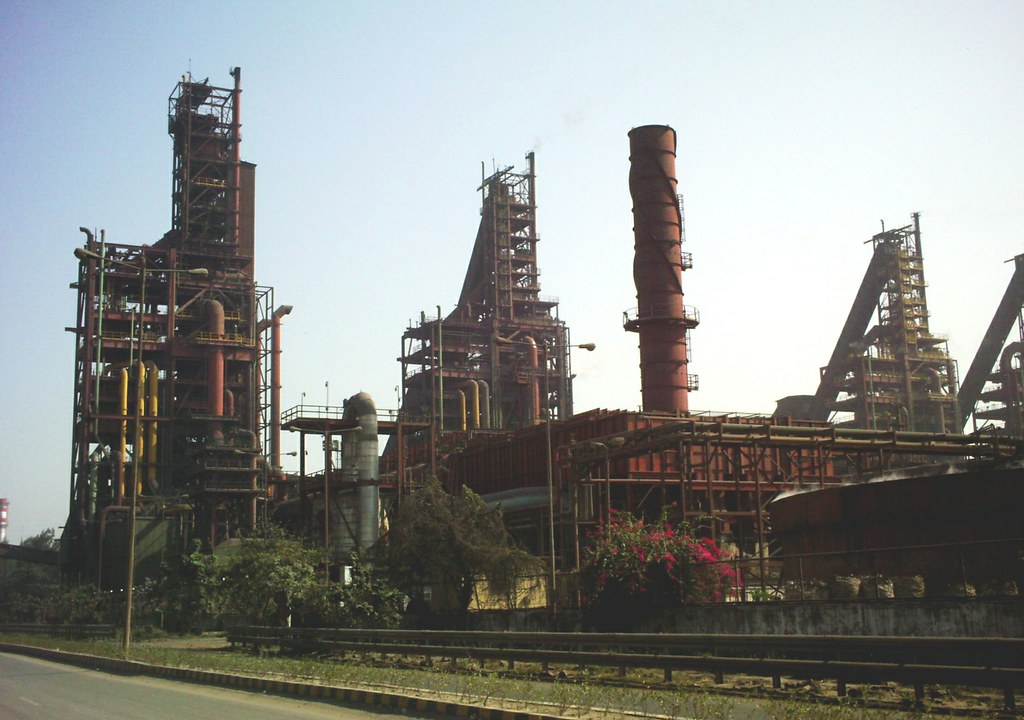
Serbia now faces a trilemma with no clean exit: keep Chinese capital flowing, meet EU climate benchmarks required for accession, and avoid carbon surcharges that could render its biggest export sector uncompetitive. Satisfying any two of these objectives undermines the third. The sharpest test case sits in Smederevo, where HBIS (formerly Hebei Iron and Steel) Group operates a steel plant that is simultaneously Serbia’s largest exporter, Beijing’s flagship industrial investment in the Western Balkans, and one of the dirtiest steel operations shipping product into Europe.
How the Carbon Levy Actually Works
Starting this year, EU importers of covered goods (steel, cement, aluminum, fertilizers, electricity, and hydrogen) must purchase certificates priced to match the EU Emissions Trading System (ETS), currently trading at roughly €79 per ton of CO₂. Each certificate covers one ton of embedded emissions. The first certificates go on sale February 1, 2027, and the first annual declaration is due September 30, 2027, meaning every ton of steel shipped to the EU this year generates a financial liability that crystallizes the following year.
The phase-in schedule appears gentle: CBAM covers just 2.5 percent of embedded emissions above a best-performer benchmark in its first year, with free EU allowances shielding the rest. But the benchmark functions as a floor, not a ceiling. A producer whose emissions exceed it – and Serbian steel exports (dominated by HBIS) do so significantly – sees those excess emissions fully exposed from day one, regardless of the phase-in factor. The critical inflection arrives in 2029-2030, when the coverage factor leaps from ten percent to 48.5 percent in just two years – the single largest acceleration in the schedule.
Producers who cannot submit verified actual emissions face country-specific default values with escalating penalties: a 10 percent markup this year, 20 percent next year, and 30 percent from 2028 onward. This creates a punitive cost tier for anyone lacking EU-standard monitoring and verification systems.
In 2024 transitional CBAM reporting iron and steel accounted for 61 percent of all emissions reported under CBAM during the transitional phase – 102.5 million tons out of 167 million total. Serbia’s emissions intensity of nearly 3 tCO₂e per ton, roughly double the EU average, means its CBAM exposure far exceeds what its modest share of EU steel import volume would suggest. Nearly all of that exposure traces to a single plant.
A Flagship That Cannot Keep Up
HBIS acquired the Smederevo steel plant for €46 million in 2016, after U.S. Steel sold it back to the Serbian government for one dollar following more than $400 million in accumulated losses. President Xi Jinping visited the plant personally in June 2016 and has invoked the plant repeatedly since, most recently in May 2024, calling it a demonstration of high-quality Belt and Road Initiative (BRI) cooperation. HBIS retained all roughly 5,000 workers, turned the plant into Serbia’s top exporter for four consecutive years, and generated cumulative exports of €4.77 billion through 2023. Smederevo is more than an industrial investment. It is a political symbol, personally endorsed by Xi on multiple occasions.
The emissions gap, however, is structural. At 2.3 tons of CO₂ per ton of hot-rolled coil, Smederevo sits 68 percent above the CBAM best-performer benchmark – a gap of 0.93 tons per ton that is fully exposed to carbon pricing with no free-allocation shield. HBIS has invested approximately €300 million in environmental upgrades since acquisition, bringing emissions down from 2.8 tons. But optimizing existing blast-furnace technology can yield perhaps 10 percent further reduction at best. Reaching benchmark parity without fundamental technology change is not possible.
The cost trajectory is unforgiving. At current ETS prices, CBAM adds roughly €76 per ton of steel this year. By 2030, with the phase-in factor at 48.5 percent and projected ETS prices of around €126 per ton, total CBAM costs reach approximately €201 per ton – roughly 30 percent of product value. By full implementation in 2034, costs could hit €426 per ton, exceeding 60 percent of product value. That is not a surcharge. That is an existential threat to the business model.
Smederevo’s operational picture is already grim. One of two blast furnaces has been idled since mid-2023. Output dropped to roughly 1.1 million tons, half of capacity. The plant recorded net losses of approximately €290 million across 2023 and 2024. HBIS has fallen from Serbia’s top exporter to third. Roughly 55 percent of output goes to EU markets, making CBAM exposure not marginal but central.
HBIS has the technology to fix this. The parent company operates a 1.2 million ton hydrogen metallurgy line at its Zhangxuan facility in China and signed its first commercial green steel export order to Europe in July 2025 – 10,000 tons of hydrogen-reduced slab shipped to Italy with a 50 percent emissions reduction. No comparable technology transfer to Smederevo has been announced or scheduled. HBIS has chosen not to deploy its green steel capabilities in Serbia.
Serbia’s €4 Down Payment
Belgrade’s legislative response amounts to a strategic hedge dressed up as climate policy. In October 2025, the government fast-tracked two carbon pricing laws through public consultation in just 20 days. The domestic tax covers roughly 50 companies at a rate of €4 per ton of CO₂, capturing roughly five percent of the ETS price. Under CBAM rules, carbon prices paid in the country of origin offset EU certificate obligations, so Serbia retains that sliver of revenue domestically rather than sending it to Brussels. Serbian officials describe an escalation pathway to €40 per ton by 2030 and EU parity by 2034. This trajectory is not codified in legislation. The €4 rate is fixed, and any increase requires new government action.
The credibility of escalation is low. No EU accession chapters have been opened since December 2021. Public support for membership sits at roughly 39 percent. Belgrade commissioned a 350-megawatt lignite plant at Kostolac B3 in late 2024 – built by China Machinery Engineering Corporation with $608 million in China Exim Bank financing, with no carbon price in its feasibility study. Serbia generates roughly 60 percent of its electricity from lignite and faces estimated EU environmental compliance costs of €13-15 billion, roughly 20 percent of GDP. The €4 tax is a down payment on a bill Belgrade has not yet agreed to pay.
No Clean Exit
Conventional framing treats Serbia’s situation as a choice: lean toward Brussels or lean toward Beijing. The evidence suggests something more constrained. China holds 31.3 percent of Serbia’s foreign direct investment stock, with billions of euros overwhelmingly concentrated in carbon-intensive sectors: HBIS at Smederevo, Zijin’s copper smelting at Bor, and the Kostolac B3 lignite plant. The 2023 Free Trade Agreement – the first between China and a Western Balkan country – brought bilateral trade to $7.4 billion. These investments anchor employment and exports, but any serious carbon pricing regime would directly alter the economics that made them attractive.
Meanwhile, the EU accession remains stalled. Eight member states blocked new chapters in November 2024, citing Serbia’s 51 percent alignment with EU foreign policy positions and its refusal to sanction Russia. CBAM creates indirect conditionality that operates independently of formal negotiations: costs accrue mechanically whether Belgrade aligns with Brussels or not.
Compounding Constraints
The pressures interact in ways that foreclose easy solutions. Raising carbon prices toward EU levels would impose annual costs of €166-198 million on Kostolac B3 alone while adding roughly €182 per ton to HBIS production costs. Stalling on accession forfeits precisely the climate funding – including the EU’s €1.58 billion Reform and Growth Facility offer, with 37 percent earmarked for climate – that could finance transition. Deepening ties with Beijing directly impedes accession progress. Yet Chinese capital fills the investment vacuum that accession stagnation creates. This is a self-reinforcing cycle, not a menu of options.
Four indicators over the next 18 months will signal whether Serbia is adapting or paralyzed. First, whether HBIS submits verified actual emissions for its initial CBAM declaration or accepts penalized default values, verified data signals a company positioning to compete, while default penalties signal one preparing to redirect output away from Europe. Second, whether Belgrade introduces a binding carbon price escalation pathway or holds the €4 rate flat. Third, whether HBIS announces any technology transfer from Zhangxuan to Smederevo. Fourth, whether the European Commission’s proposed expansion of CBAM to roughly 180 downstream products brings Serbia’s €4 billion automotive components sector into scope, widening the trilemma from one flagship plant to a systemic competitiveness problem. CBAM converts a geopolitical question into a quarterly accounting problem. The numbers will tell the story before the politics does – and they are already talking.
Written by

Alexei Hoffman
Alexei Hoffman is a Master of Asian Studies candidate at Georgetown University, concentrating in International Political Economy and Energy, Environment, and Transnational Issues. He holds a J.D. from Georgia State University College of Law. His research examines energy infrastructure, resource governance, and security constraints across the post-Soviet space.