After decades of cold caution, inherited from the communist era, Romania’s foreign policy seems to have finally become a little more pragmatic regarding its relationship with Taiwan. A recent order from the Ministry of Foreign Affairs, although technical, marks a historic change in attitude, ending an era in which Taiwanese citizens were treated with inexplicable hostility at our borders.
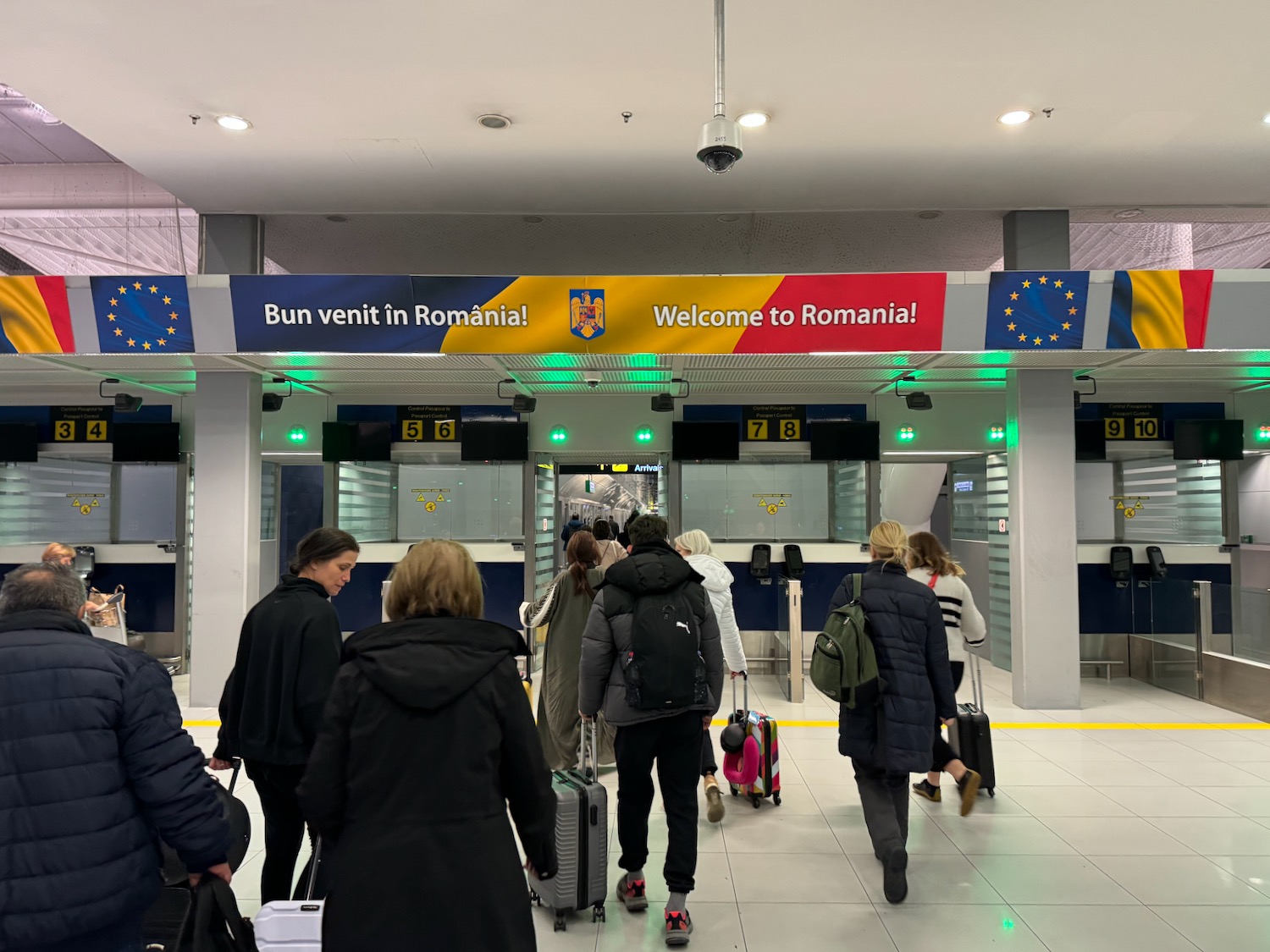
For years, Romania not only kept Taiwan at arm’s length, but also displayed an almost vexatious attitude towards its visitors. Stories of Taiwanese citizens forced to wait for hours, sometimes even days, in the airport or at the border, simply because border police refused to stamp their passports, circulated constantly. This practice, a vestige of rigid diplomacy, set Romania apart from most EU member states.
Finally on the List: Recognizing Travel Documents
Now, this chapter appears to be drawing to a close, as Taiwan has been finally mentioned in an official document issued by the Romanian Foreign Ministry.
Recently, a new order signed by the new Minister of Foreign Affairs, Oana-Silvia Țoiu, updated the list of travel documents recognized by the Romanian state. Although the main purpose was to align with the European Commission’s decision to ban passports issued by Russia in the occupied territories of Ukraine (Crimea, Donetsk, Kherson, etc.), a crucial change was slipped into Annex C of the document.
For the first time, Taiwan is officially included in the section regarding “entities not recognized as states,” whose “simple” travel documents are now accepted for border crossing. This decision, although bureaucratic, represents a step towards normality, in alignment with practices at the European level. It is not an act of defiance or provocation towards China, but one of normalizing relations with an economic and democratic partner, just as all EU countries do, including those very China-friendly, such as Hungary.
Political Pressure and the Cost of Rigidity
This move by the Ministry of Foreign Affairs did not come in a vacuum. It reflected a growing political pressure from some members of the Romanian Parliament to abandon a foreign policy that is considered outdated. In 2023, the words “I am Taiwanese” were uttered for the first time in the plenary session of the Chamber of Deputies, in Hokkien and Mandarin, by a former Romanian deputy, as a sign of solidarity with the democratic pursuit of the Taiwanese people.
Recently, nine Romanian parliamentarians from various parties across the political spectrum (USR, PNL, PSD, and UDMR) sent an open letter to the president, prime minister and foreign affairs minister, calling for the official opening of relations with Taiwan. In the press release, they emphasize that “the situation of bilateral relations between Romania and Taiwan is characterized by prolonged stagnation, caused by an interpretation of the ‘One China’ principle [sic] that has remained unchanged since the communist period.” This “obtuse” approach, they say, has prohibited any bilateral dialogue and discouraged investment, bringing Romania closer, in its approach to Taiwan, to unfriendly states like Russia and North Korea, in total contradiction with its European and American partners.
This rigidity came at a cost. While countries such as Hungary, Czech Republic, and Poland have attracted billions of euros in Taiwanese investment in high-tech industries, Romania is lagging significantly behind. At the moment, Taiwan does not even have a representative office in Bucharest and relations with Romania are being currently managed from Taipei’s office in Bratislava.
Billions vs. Millions: a Missed Opportunity
The letter further emphasizes the “peculiar situation” Romania has placed itself in compared to its regional peers. While smaller countries like Hungary and the Czech Republic have successfully attracted over $1 billion each in Taiwanese investments, Romania is stuck at $10 million. The letter explicitly blames this on a lack of diplomatic safety nets, warning that top-tier tech companies simply will not enter a country where their official documents are rejected and where they lack basic consular support.
In late November, a conference titled “Digital Cooperation: AI and Cybersecurity” was hosted in Bucharest by the New Strategy Center and the Association for the Promotion of Economic and Cultural Exchanges with Taiwan (ROTA). The event featured the participation of Ambassador David Nan-Yang Lee from the Taipei Representative Office in Bratislava. Although no Romanian officials were present on the panel, this event signals momentum and a growing interest in revitalizing bilateral economic relations. This is particularly notable given that the tenure of the new Minister of Foreign Affairs seems to signal, through recent administrative moves, a subtle shift towards openness and engagement.
Tech to Defense
With a deadly war looming on its borders, Romania desperately needs not only a strong economy but also the technology to boost its defense capabilities. Russia’s war of aggression in Ukraine is fought with drones, weaponized disinformation, and cyberattacks on critical civilian infrastructure. Countering these threats requires a robust supply chain for the advanced electronics and semiconductors that power modern defense systems. In this equation, Taiwan – the world’s leading producer of high-tech components – is not just a potential partner, but an indispensable link in securing Romania’s defense infrastructure for 21st century warfare.
This is particularly relevant, as Russia’s provocations on the Eastern Flank have recently increased, and Romania is no exception. Weaponized disinformation is already present, and Russian drones have breached Romania’s airspace before, though they previously did not penetrate deep inland. However, on November 25th, a Russian drone entered Romanian airspace and flew over several counties, sending a chill through the population. The Romanian Air Force scrambled jets with orders to neutralize the target, but failed to do so, and the drone eventually crashed in Vaslui County. This incident confirmed what the Presidential Administration warned just one day earlier, that the state “must be prepared to manage the risks of a large-scale, long-term armed conflict” near its borders and urgently strengthen its national resilience.
Financially, Romania is well-positioned to act, standing as the second-largest recipient of funding through the European Security Action for Europe (SAFE) mechanism, after Poland, with 16.68 billion euros planned for investment in defense capabilities. However, money alone is not enough; it requires access to advanced hardware. Given Taiwan’s dominance in the high-tech sector, a partnership would be not just an economic option but a necessity for Romania’s defense modernization in this critical context. Far from facing public hostility, such cooperation would meet a receptive society, with a growing number of analysts already advocating for closer economic relations with Taiwan.
Looking Ahead
The recent order from the Ministry of Foreign Affairs indicates that pragmatism is beginning to overcome inertia. While seemingly a technical step, it is one of major significance, bringing Romania in line with the values of the Euro-Atlantic area. Even if analysts remain rightfully skeptical of the government’s readiness to pursue closer ties, the strategic imperative is becoming impossible to deny. Amidst a generally receptive public, the narrative is shifting: decision-makers are increasingly urged to recognize that in the face of modern warfare, accessing Taiwan’s technological expertise is a vital step that transcends traditional diplomatic reluctance.
Whether this technical adjustment signals a broader strategic pivot remains to be seen. The next logical steps, that is engaging with Taiwanese officials and opening an economic representative office, would not only normalize relations but could finally unlock the billions in investment potential that Romania has previously neglected.
Written by

Andreea Leonte
AndreeaLeonteRoAndreea Leonte is a China researcher at the Romanian Institute for the Study of the Asia-Pacific (RISAP).