CEE-Nordic Dialogue on Chinese Information Manipulation and Interference
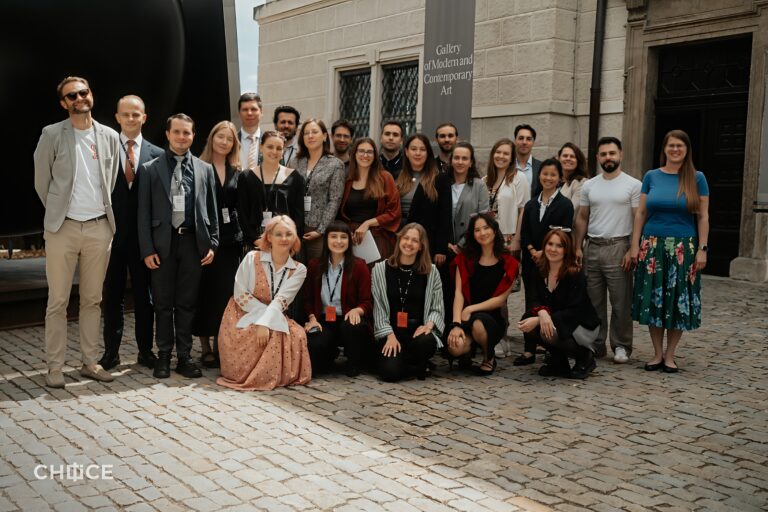
On December 3, 2025, the third iteration of the CEE-Nordic Dialogue on China was co-organized in Stockholm by the Swedish National China Centre at the Swedish Institute of International Affairs (UI) and AMO’s China Observers in Central and Eastern Europe (CHOICE) – this time focusing on Chinese propaganda and disinformation.
European discussions about Chinese disinformation and propaganda are gaining urgency, as concerns grow over attempts to shape narratives and influence public opinion. China seeks to project a positive image abroad and counter criticism by engaging media outlets, cultivating diaspora networks, and amplifying sympathetic voices online. These efforts blur the line between legitimate public diplomacy and disinformation campaigns. Governments, media organizations, and civil society actors across Europe are now grappling with how to balance the protection of open debate and the need to safeguard democratic resilience and information integrity.
Chinese Narratives Directed Against Europe
Chinese information campaigns operate on multiple levels, pairing positive messaging and actions about development, technology, and cooperation with systemic critiques that question democratic norms or highlight corruption. Narratives often stress that maintaining good relations with China is highly beneficial, while implying that questioning China will entail serious consequences. A recurring theme is the portrayal of China as a democracy – albeit a different kind of democracy.
Messaging strategies vary by audience. Positive messages about China are typically directed at the broader local public, while negative messaging about the host country is aimed at diaspora communities. The latter appears intended to prevent these communities from developing more favorable views of the host country than of China.
Foreign information manipulation and interference (FIMI) by China tends to be opportunistic, exploiting existing vulnerabilities such as societal frictions within host countries. In Sweden, as well as in Czechia, for example, anti‑establishment media has increasingly served as a platform for narratives promoted by the Chinese Embassy. This raises an important question: does this reliance on fringe platforms indicate the resilience of Swedish society – suggesting that Chinese actors lack access to more established media channels?
At the same time, China is embedding itself locally through municipal-level partnerships that begin with party networks and expand into broader community engagement. Overall, China’s influence efforts reflect a learning curve – improving concealment and refining methods.
Organization Within Chinese Diasporas in Europe
Depending on the definition used, between one and three million people of Chinese origin live in Europe. Some Western commentators prefer speaking of diasporas in the plural, as these communities are far from homogeneous. CCP media work in Europe is closely connected to strategies of political mobilization and intelligence collection within these communities.
Questions frequently arise about what the United Front is and how it operates. It should be noted that CCP-loyal associations in Europe may present themselves through structures and procedures that resemble those of ordinary civic organizations in democratic societies – participating in community life, public consultations, and political engagement in seemingly normal ways. The crucial problem, however, is one of underlying loyalty: when advising municipalities, universities, and NGOs on cooperation with United Front-linked organizations, it must be understood that these groups ultimately serve the interests of the CCP rather than the democratic societies in which they operate – a loyalty fundamentally at odds with democratic values.
At the same time, a new and emerging wave of voices not aligned with the CCP is appearing across Europe. These actors seek to create a separate public space that is not aligned with the CCP, though not necessarily in direct opposition to it. However, important aspects of these dynamics remain insufficiently explored.
Shaping Opinions Within the Diasporas
During the 2024-2025 election year, Ouzhou Shibao – the largest and most influential Chinese‑language newspaper in Europe – played a significant role. Founded in 1983, it has developed into an extensive media organization with a strong multi‑platform presence and free print distribution in many cities. Its readership is not limited to older generations; younger audiences are also engaged. While some other Chinese‑language newspapers operating in Europe do not focus on local elections, Ouzhou Shibao is strategically positioned to communicate CCP‑aligned narratives to audiences across Europe.
The newspaper emphasizes democratic fragility, political instability, and chaos, echoing the CCP narrative that “the West is in decline.” This framing contrasts European disorder with Chinese order and selectively legitimizes actors aligned with China’s geopolitical preferences, such as Alice Weidel of the party Alternative for Germany. These findings underscore the necessity of viewing Chinese‑language media as transnational political actors embedded in China’s global communication strategy.
Knowledge Building and Support Structures
One way to counter Chinese propaganda and disinformation is through knowledge building. However, it is problematic that China is increasingly investing in area studies, while Western countries are reducing funding for these fields. The consequences of this imbalance are likely to materialize over time.
There is also a significant knowledge gap regarding the situation of Chinese diasporas in Europe. One reason is the limited scholarly attention to the topic. This, in turn, is partly due to the sensitivity that sometimes surrounds research in this area.
It was noted that European countries generally lack support structures that diasporas exposed to transnational repression can turn to. At the same time, municipalities, universities, and other organizations often face the need to vet Chinese counterparts before entering into cooperation. The question, then, is where they should turn for guidance.
A Russian Playbook?
While the intensity of Chinese and Russian operations differs, structural similarities are evident. China’s approach to influence and interference is methodical, incremental, and adaptive. Across Europe, Beijing is testing and building capabilities, learning in part from the so-called “Russian playbook” but refining it according to its own priorities. This learning process is uneven at times, yet it points to a clear trajectory toward greater professionalization in narrative and influence operations.
Although Chinese and Russian messaging sometimes converges, the overlap is often reactive rather than coordinated. In Eastern Europe, for example, Chinese responses to drone incidents in Poland echoed Russian framing of “Western escalation”, creating an appearance of alignment.
China maintains clear boundaries, avoiding some Russian narratives and diverging in cases such as Moldova, where Beijing has expressed support for EU ambitions, or Ukraine, where China adopts a more global framing than Russia’s Europe-focused approach. While some early parallels with Russian outlets existed, Chinese platforms such as CGTN have mainly been promoting distinct Chinese narratives.
A key feature of Chinese efforts is their broad reach and strong brand presence. Narratives project images of modernity, benevolence, and normalcy, embedding political messaging within every day, ostensibly non-political contexts. This projection of everyday modernity gives China a different kind of appeal than Russian efforts, which lack comparable positive pull factors.
Written by

CHOICE
CHOICE is a multinational consortium of experts providing informed analysis on the rising influence of the People’s Republic of China within the countries of Central and Eastern Europe (CEE).